|
||||||||
| AHYMSIN NEWSLETTER, ISSUE - August 2019 | ||||||||
|
||||||||
|
|
||||||||
Sanatsujata – The Child Saintby Swami Veda
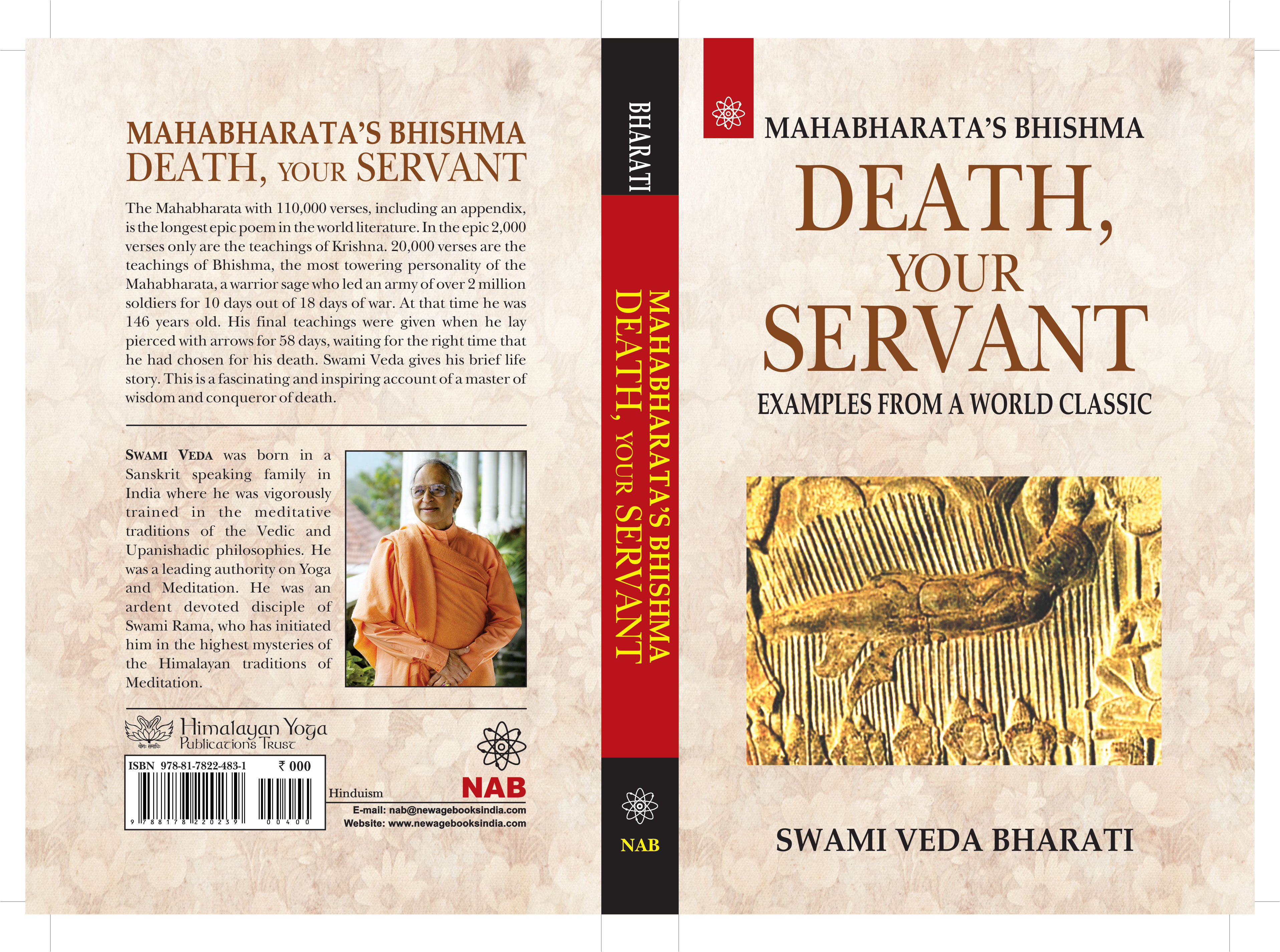
[The following passage is taken from the book Death Your Servant, Mahabharata’s Bhishma: Examples from a World Classic by Swami Veda Bharati, published in 2019 by Himalayan Yoga Publications Trust and New Age Books.] It is in this tradition that we find saint-philosophers like Shankaracharya who began writing his commentaries at the age of sixteen. Sanatsujata was another such saint. His date is lost in antiquity. Regarded as one of the twenty-four incarnations of God in orthodox Hinduism, he was one of four brothers who are equally venerated in the scriptural tradition and to whom have been ascribed the eternal purity of childhood and youth. Their names are Sanaka, Sanandana, Sanatana and Sanatkumara. Sanatsujata is another name of Sanatkumara. According to the Puranas, all four roamed about as adepts at the age of five, teaching their disciples. In the Chändogya Upanishad (7.1-26) Rishi Narada asks Sanatkumara for instruction. Sanatkumara inquires about what he has already studied. Narada replies that he has studied the four Vedas, phonetics, ritual, grammar, etymology, poetics, astronomy, the physical sciences, and so on. But I have not yet crossed the channel of sorrow. I have heard from preceptors like yourself that he who knows the atman can so cross; would you therefore help me across this channel of sorrow? Sanatkumara says:
and proceeds with more detailed instruction. In the Puranas and Mahabharata, there are numerous episodes of Sanatkumara imparting his knowledge to sages and kings. One such episode is recounted by Bhishma in Moksha-dharma-parvan of Mahabharata (chapter 329, verses 5-60). Narada narrates to Çuka (another child sage, son of Vyasa) how Sanatkumara taught the munis and rishis. This narrative contains such gems as these (paraphrased here):
Such sayings of the immortal sages still need to be collected and translated. Editor's Note:To order your new copy of Mahabharata’s Bhishma, Death Your Servant, please visit www.yogapublications.org or send an email at hyptbooks@gmail.com.
|
||||||||