Waves of Love: Swami Veda’s Mahasamadhi

akhaṇḍamaṇḍalākāraṃ vyāptaṃ yena carācaraṃ |

tatpadaṃ darśitaṃ yena tasmai śrīgurave namaḥ ||

 (Which) pervades the entire unbroken form of the circle (of creation), moving and unmoving. To that beautiful and benevolent Guru through whom that state was revealed (to me), salutations.

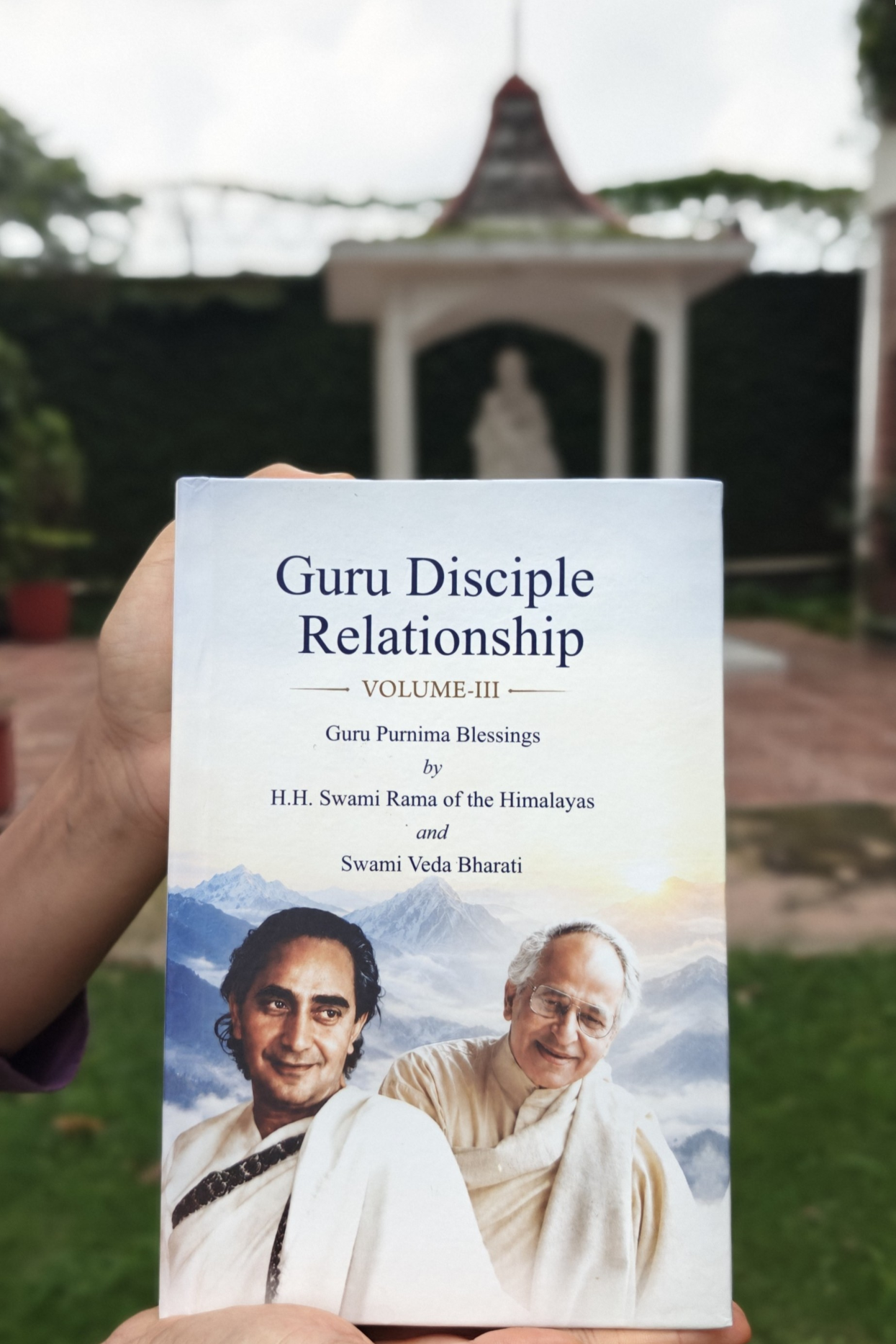
Stepping into the ashram is always a gift, lovingly created and nurtured by our beloved Masters, and on the special sacred occasions, like Swami Veda’s Mahasamadhi, we honour that gift with deep gratitude having received such a blessing.

Swami-Veda-Bharati-jis-12th-Mahasamadhi-Day

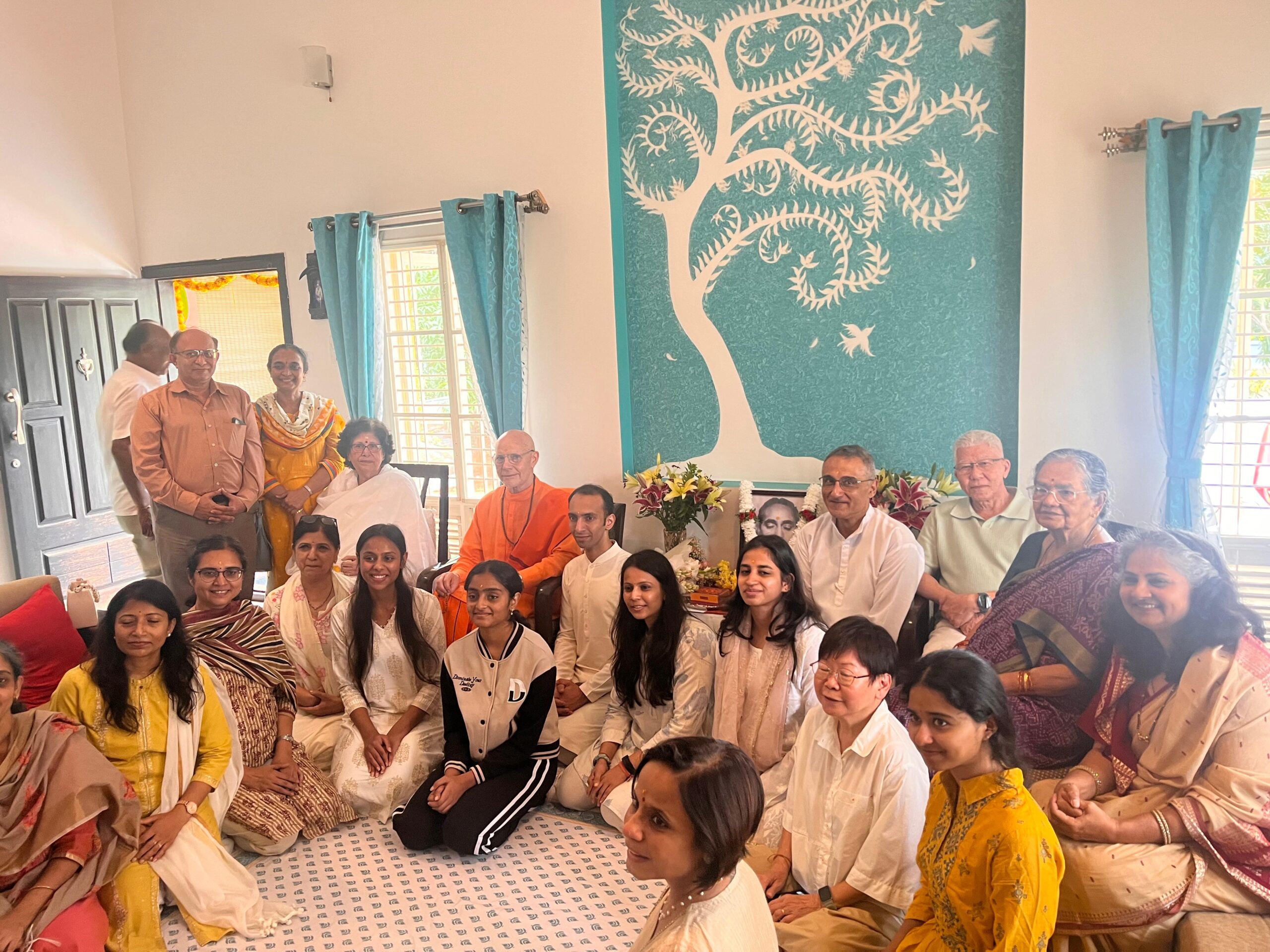
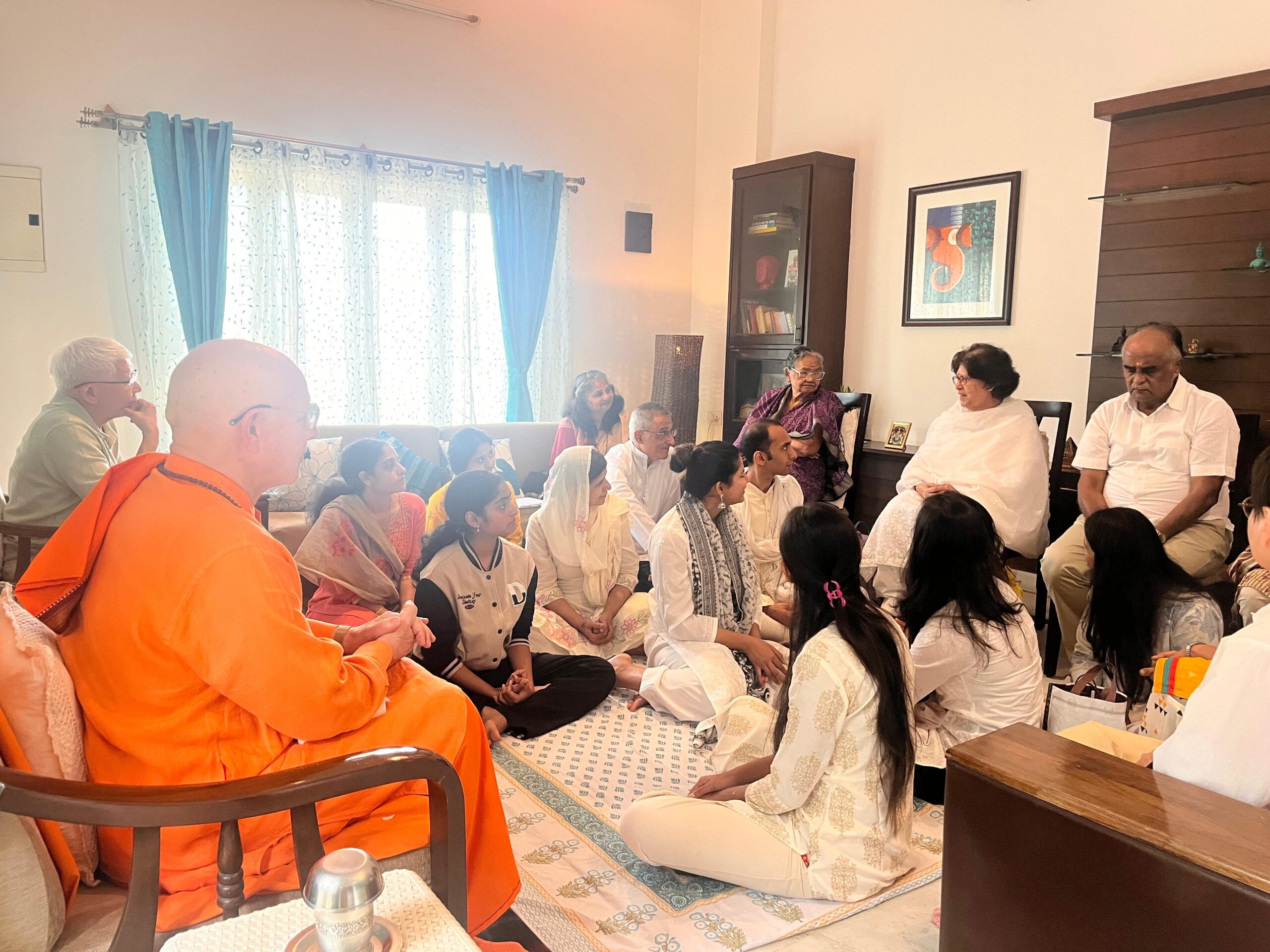
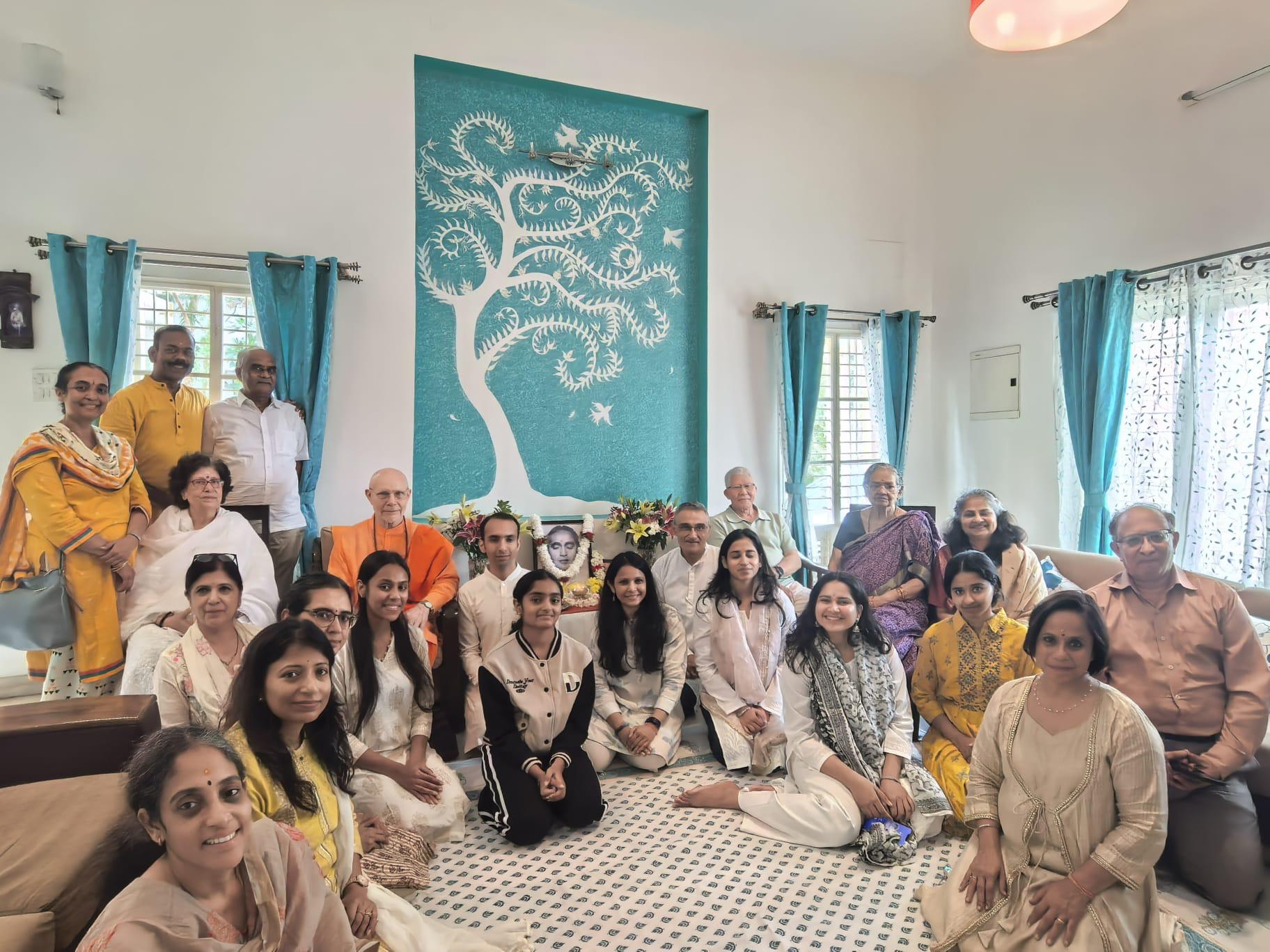
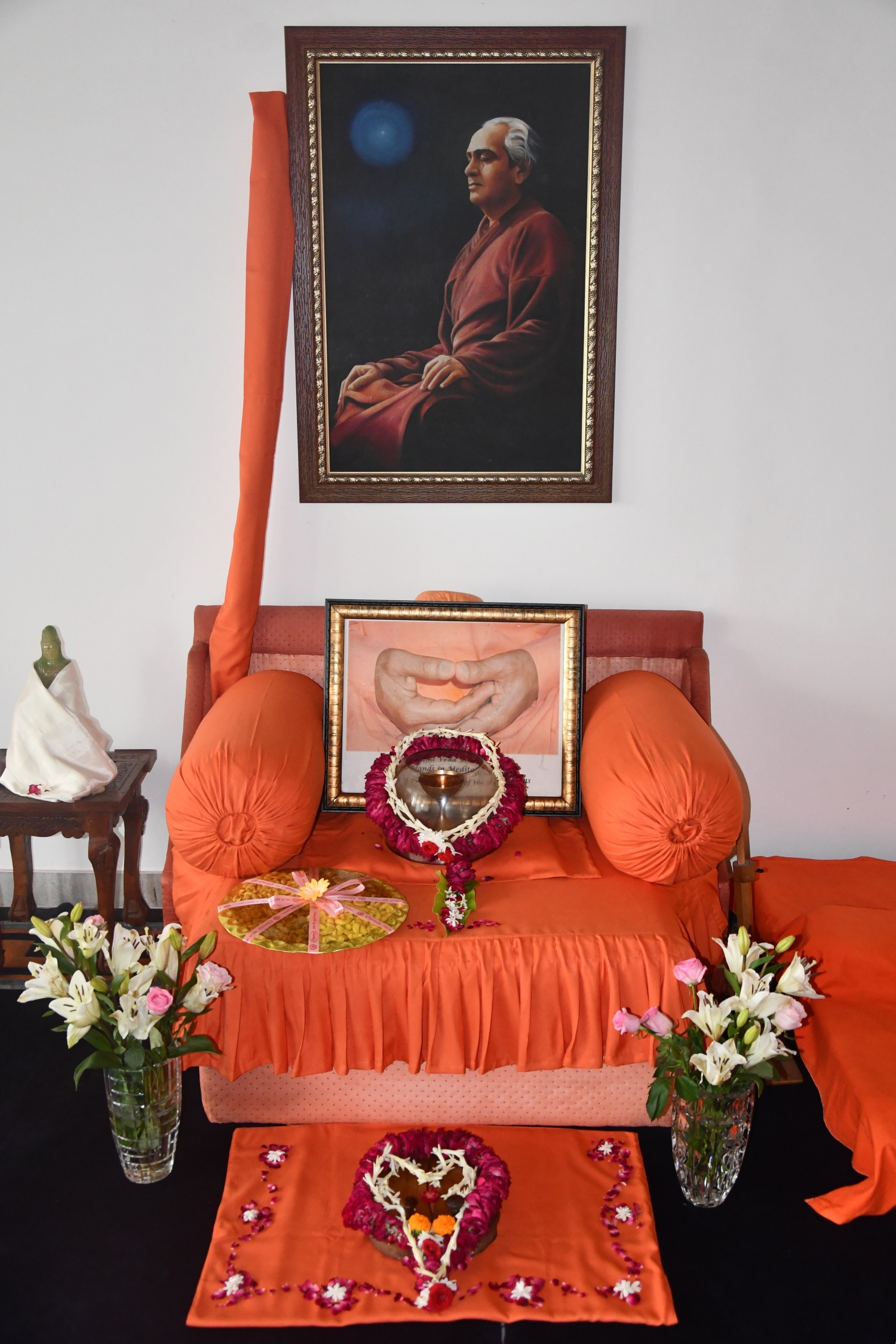
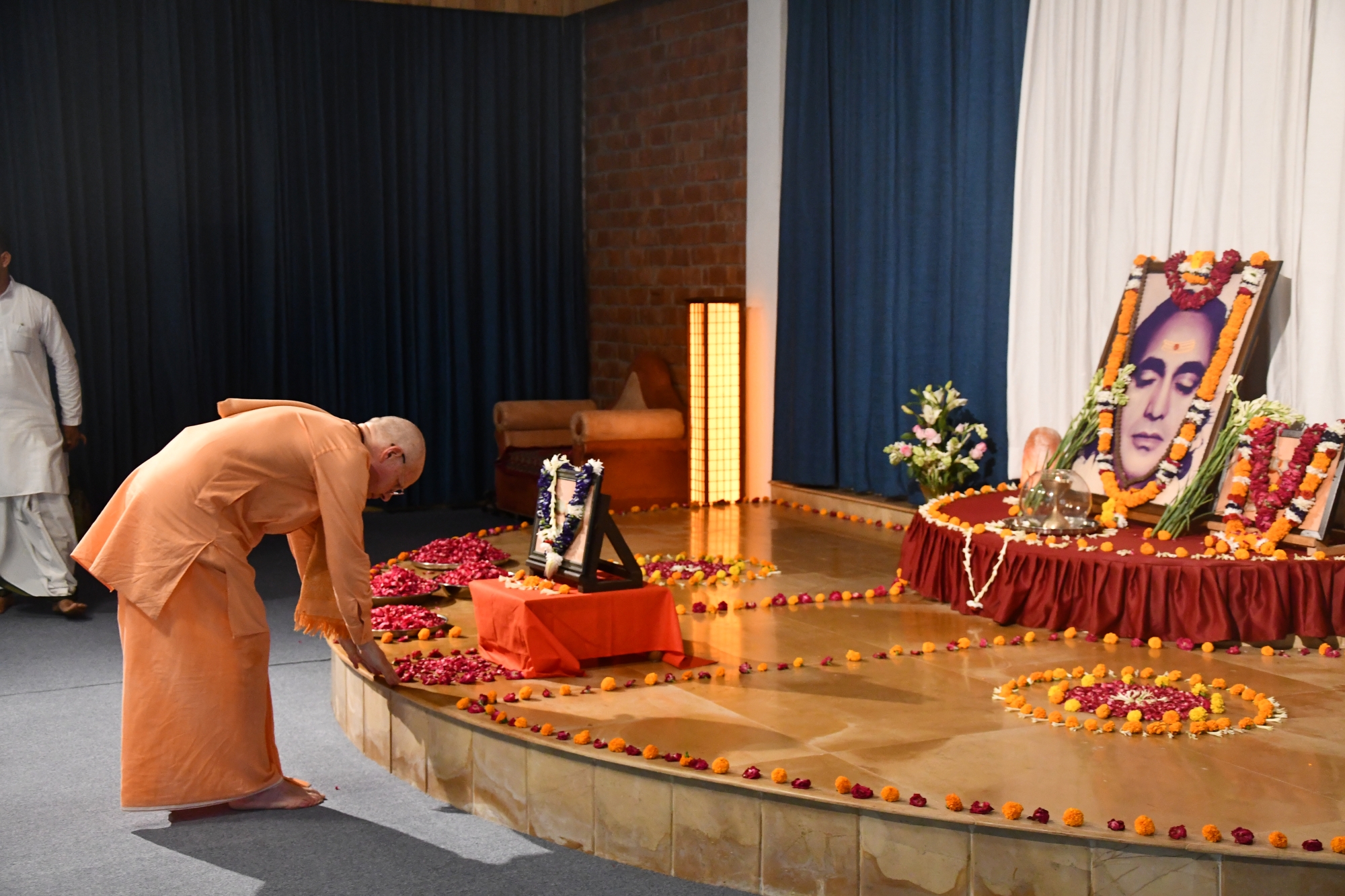
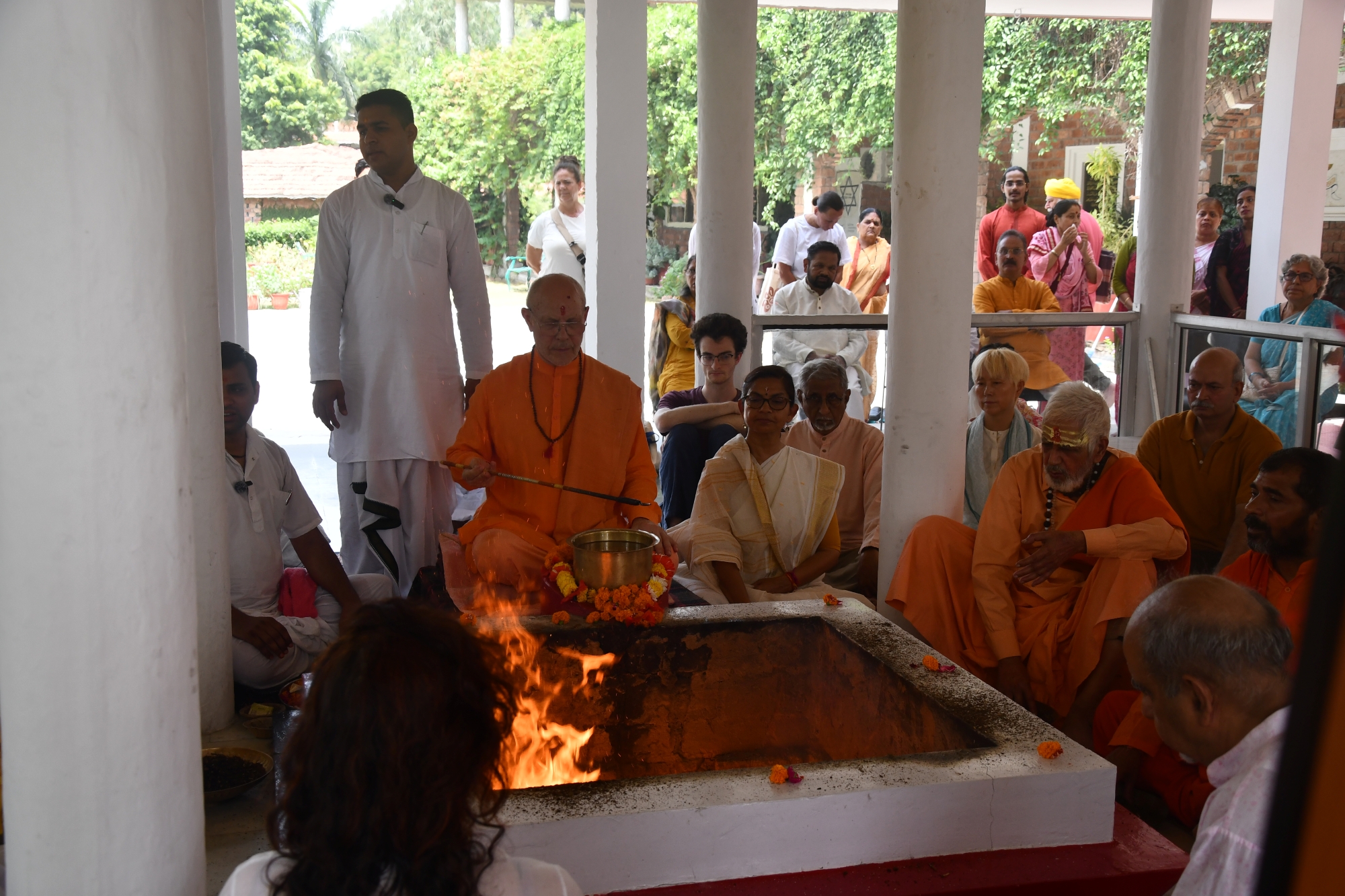
On the sacred occasion of the 12th Mahasamadhi Day of Swami Veda Bharatiji (11th Anniversary), Tuesday, the 14th July 2026, our spiritual home Swami Rama Sadhaka Grama was overwhelmed by a sentiment of pure silence (but also memories and tears), expressed through the loving presence of many students, devotees, initiates, and disciples coming from all over the world and gathered together at the feet of our beloved Swami Veda to honour and pay homage to His deep love and wisdom, with pure, open hearts.

Swami-Veda-Bharati-jis-12th-Mahasamadhi-Day

His beautiful ashram was in a bubble of special vibrations, created by all the ashram residents and initiates in the preceding 8 days through a purascharana of the akhandamandalakaram mantra, collectively offering japa of more than 1700 malas. Waves of deep love melting together in the same energy-field and becoming an unbroken stream of loving presence that permeated the entire ashram.

The Guru Disciple Relationship Retreat, taking place during those days, was a way to go more in depth with that sentiment of pure devotion and reverence to the Guru Force, the dispeller of ignorance that empowers us to discover the Guru within us.

Swami-Veda-Bharati-jis-12th-Mahasamadhi-Day

With humble and heartfelt sentiment, we went through a very subtle and profound process of transformation, feeling more and more of the universal and infinite Love that Swami Veda was sharing with us through His presence. It was a way to deepen our relationship with the Guru’s presence—a direct experience with that love and light from within, which arises from the true nature of our being. No words; just profound and subtle heart to heart connections in the cave of silence and lovingness. With serene minds and loving hearts, just feeling, day by day, His infinite divine force accompanying  us, and filling our hearts with pure divine love.

Swami-Veda-Bharati-jis-12th-Mahasamadhi-Day

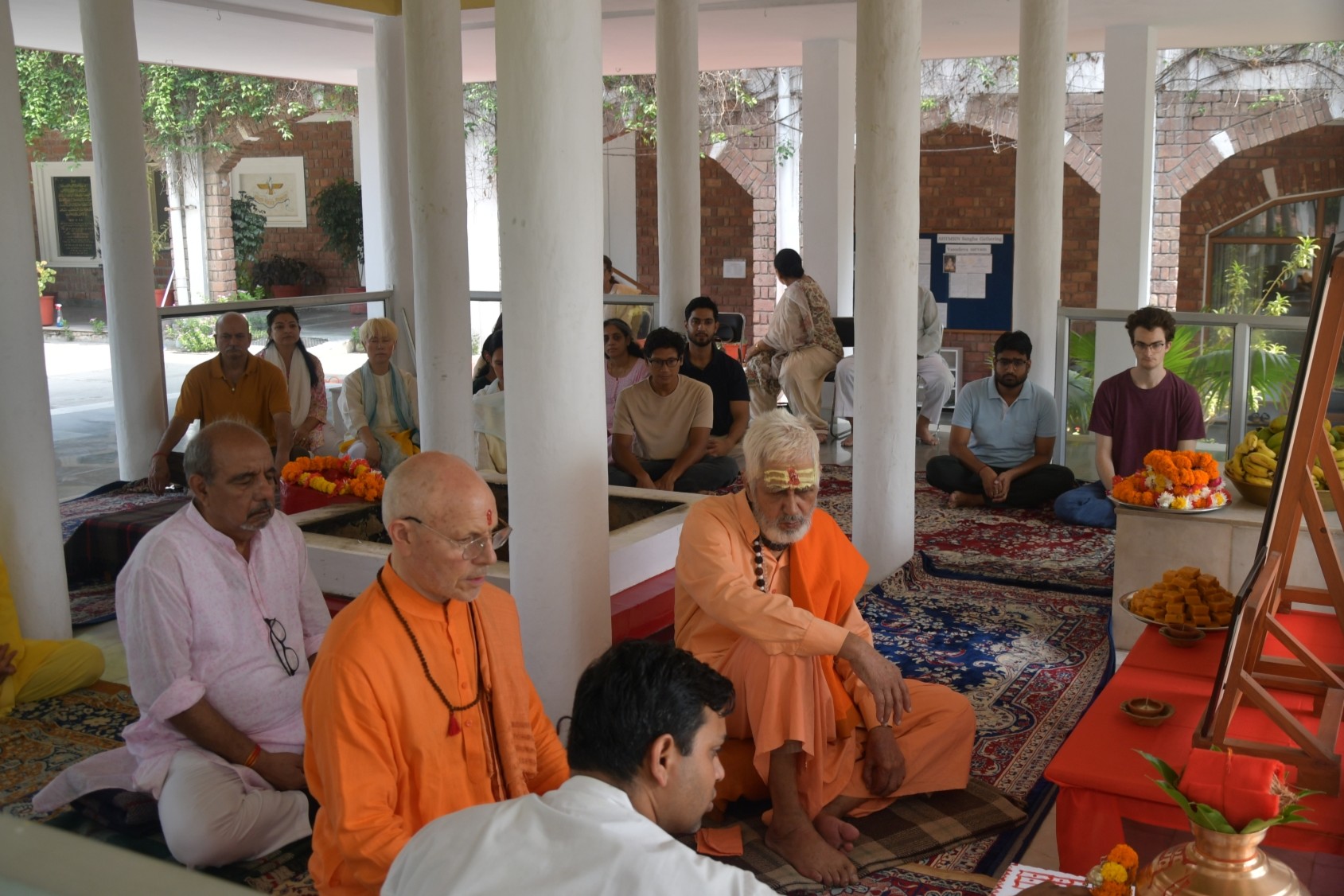
In the morning, we had pujas and havana (fire offering) dedicated to our dearest Swamiji, lead by Swami Ritavan Bharati and priests. There was also a conclusion and purhahuti of the purascharana undertaken.

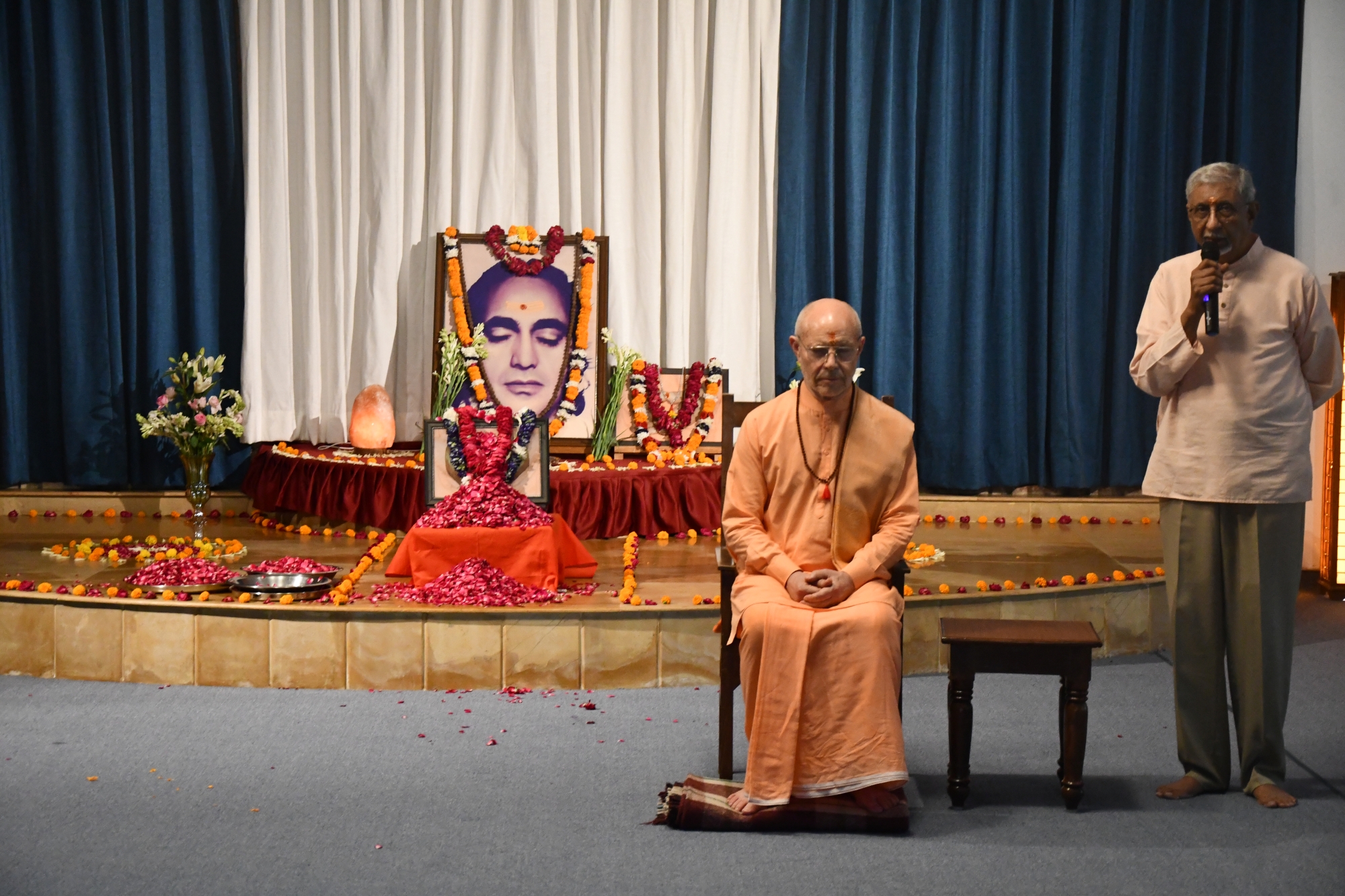
Swami Ritavan Bharati, Dr Prakash Keshaviah, Sadhana Mishra, and Namita Sinha paid their heartfelt tributes to Swamiji by reminding us how Swami Veda was an example of true unconditional, selfless love, and how He always encouraged us to change our habit patterns and become more loving persons.

 About 450 people joined the celebrations, along with 11 sadhus and 100 Sanskrit students.

Swami-Veda-Bharati-jis-12th-Mahasamadhi-Day

Swami-Veda-Bharati-jis-12th-Mahasamadhi-Day

The event concluded in the Dining Hall with a grand bhandara offered first to sadhus and brahmanas and then shared as prasada for us all. Along with the bhandara at SRSG, 250 sadhus at Niranjani Akhara and more than 2100 people at Triveni Ghat in Rishikesh received the bhandara on the sacred occasion  of Mahamandaleshwar Shri Swami Veda Bharati ji’s Mahasamadhi.

May this ocean’s waves of love (that we are), continue to melt together in the same energy-field and become One single stream of pure lovingness, without any break and with true and sincere humility and simplicity, under the shawl of the Lineage and the Guidance of His Divine Force.

Om 

tasmai śrīgurave namaḥ |

The Gift of Silence

Embracing Silence Retreat Ahymsin Switzerland

Swiss-Silence-Retreat

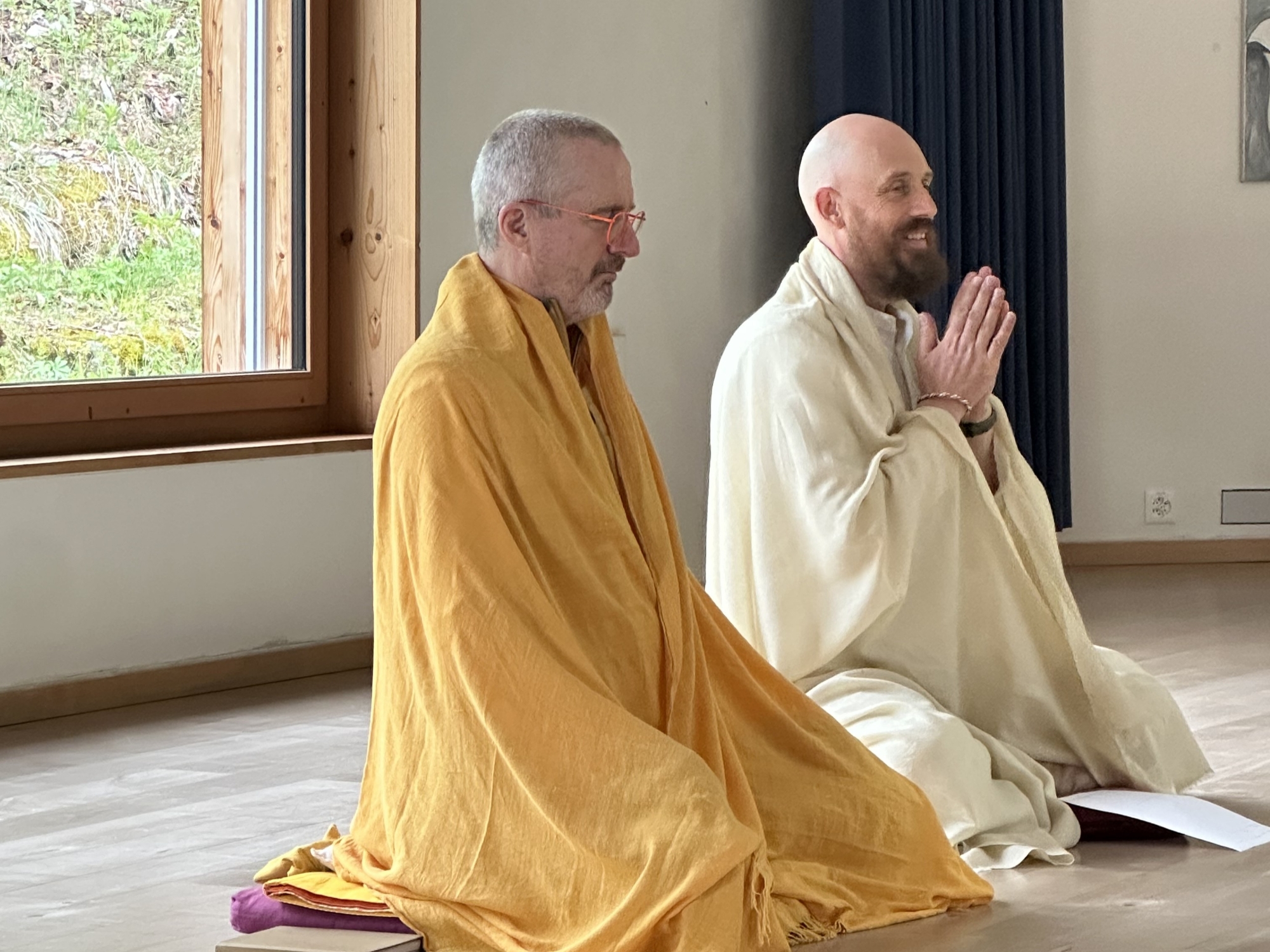
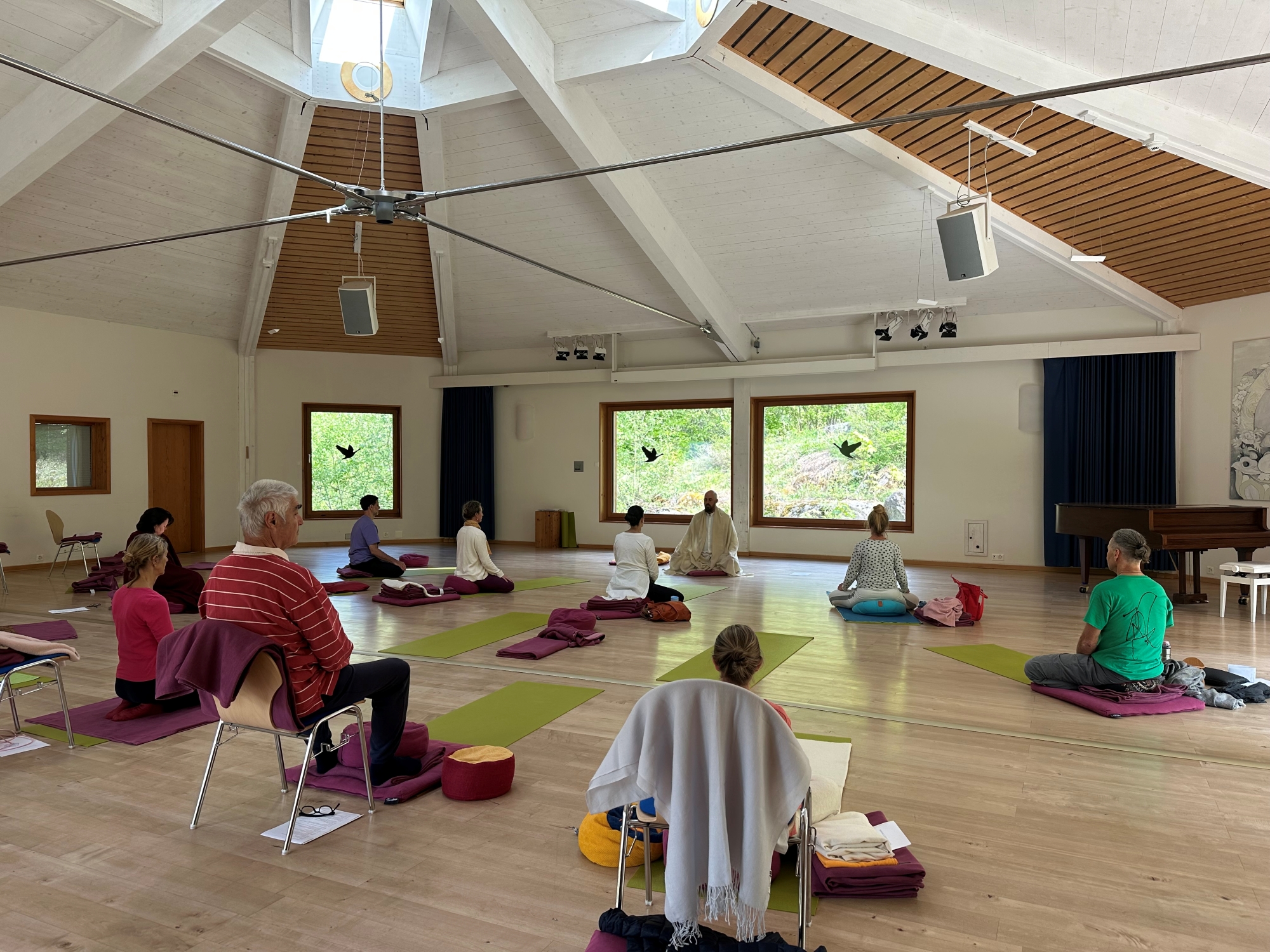
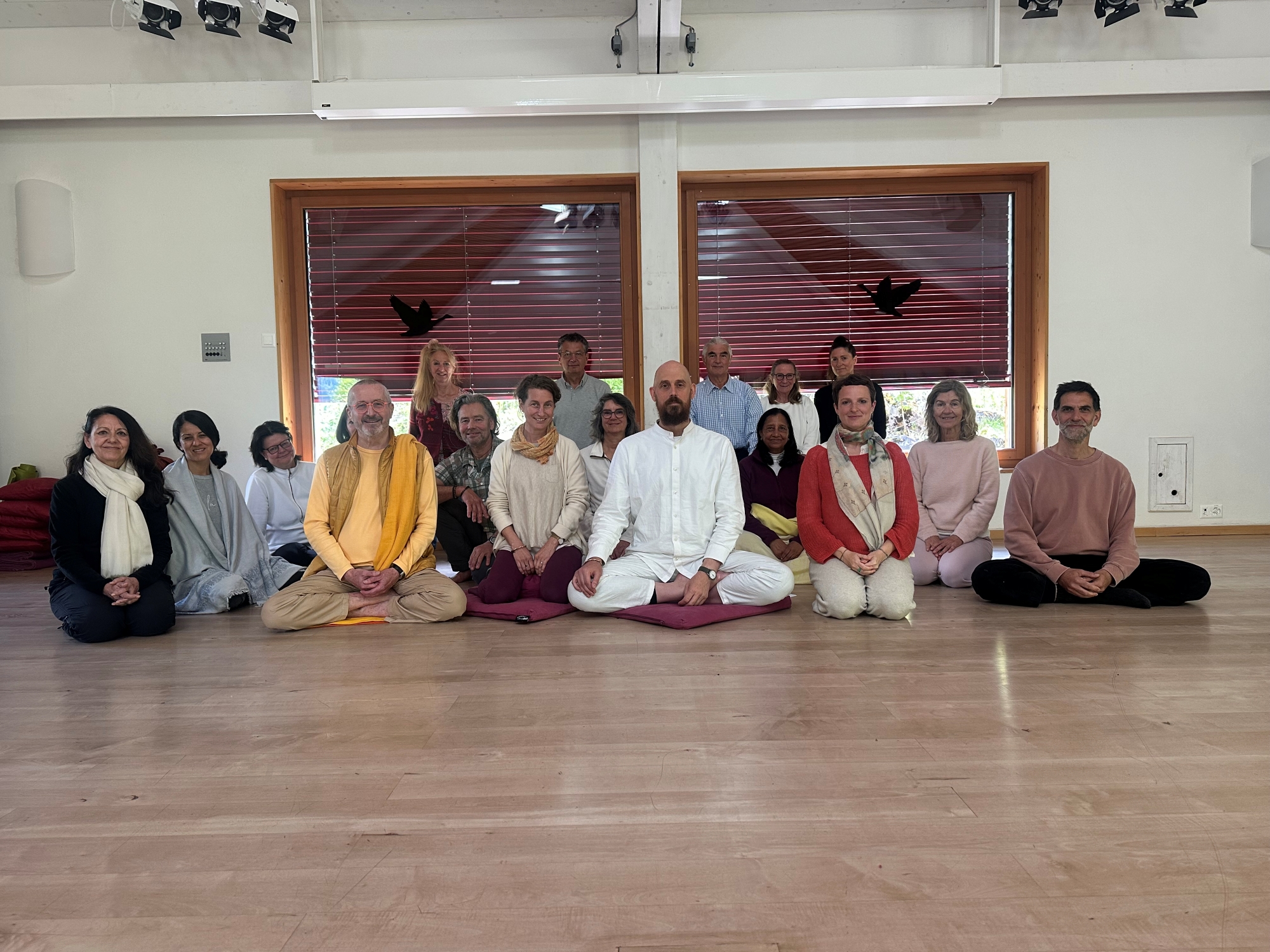
On May 11th, a group of 15 people from five different countries gathered in the heart of the Swiss mountains at Schweibenalp, Centre of Unity, for a week-long Silence Retreat guided with by Michael Kissener and John Sellinger. Perched on a sunny plateau at 1,200 metres, the retreat centre is embraced by an awe-inspiring panorama of majestic mountain peaks. As a centre for permaculture, founded as an ashram four decades ago by a disciple of Haidakhan Babaji, Schweibenalp carries a history of spiritual unity. It was also the residence of Ammaji (Mata Amritanandamayyi Devi) for nine years. Although Schweibenalp no longer functions as an ashram in the conventional sense, its all-embracing energy remained palpable, especially in the Temple of Unity, where statues and relics from all major religions reminded us of Swami Veda’s ashram in India, SRSG, and his vision of meditation as a unifying stream across faiths.

Arrival and Opening

Swiss-Silence-Retreat

On the first evening, following an opening circle and a guided meditation, we gently entered into silence, welcomed by the peaceful surroundings. Michael and John thoughtfully designed a schedule with special emphasis on īśvara-praṇidhāna (practice of the presence of the Divine), providing ample space for personal practice. For the first few days, we were gently guided with inspirational sessions and meditative practices. The sessions highlighted how mantra practice in itself is a pure path of īśvara-praṇidhāna. Guided practices served as paths into that experience, by inviting the presence of the Guru force, dedicating one’s personality as a temple, offering body, prana and mind as a dwelling place of the Divine, by refined stages in mantra japa, and by way of Atma-tattva-avalokanam, awareness of the Conscious Self.


Practices and Guidance

The landscape, newly awakened from winter and bursting into full bloom, beautifully supported the practice of silence. Walks in the permaculture gardens and contemplative walking offered moments of reflection. As the week progressed, the sunshine gave way to rain and occasional snow, prompting us to turn inward and embrace the deepening silence. Guidance without words gradually expanded, and the group was gently supported throughout.

Reflections and Closing

Swiss-Silence-Retreat

On the last day, after a final meditation guided by Michael, we arranged ourselves in a circle, surrounded by an atmosphere of peace and loving kindness. The silence was slowly broken, and we shared our experiences with warmth and gratitude. Each participant contributed to the supportive atmosphere, making the silence feel less solitary and more communal. It was a privilege to share this journey with such a compassionate group. Many expressed appreciation for the guides, the practices, and the serene environment. The presence of the Guru was strongly felt, and the sense of unity was unmistakable.

Presently we are preparing for the next Silence Retreat, which will be held in October 2027. If you would like more information about our upcoming events and initiatives, please contact us via ahymsinch@gmail.com.  Soon we will have our own website ahymsin.ch and you can follow our activities on facebook as well as Instagram.

New HYT-TTP Website and online student/mentor platform

Dear friends of the AHYMSIN Himalayan Family,

The HYT-TTP team would like to wish you all wonderful insights, depth of practices and studies on the occasion of this year’s Guru Purnima celebrations.

Over two decades ago, Swami Veda envisioned AHYMSIN, a global family with its headquarters based in Rishikesh India, that would provide the way for sharing the teachings of the Himalayan Tradition, exploring all aspects of its practices.

One of those global family elements was a convenient way for all centers to have their local teachers trained in the Teachers Training program-started in the 1990’s through the Himalayan Yoga Tradition – Teacher Training Program (HYT-TTP).

Around that time period, was also the beginning of many of the now common electronic forms of communication that could allow people half a world away to share knowledge and communicate in real time.

The HYT-TTP launched its first website in 2008, using the tools available at that time period, in order for students to continue their training remotely from home, working with a mentor on their home study, after they had attended an intensive teacher training retreat based in a traditional ashram setting.

Over the last two years, the HYT-TTP team has been working very intensely to update and refresh the interactive student/mentor platform, putting into play modern tools to continue to support the Teachers Training program into the next few decades.

With the blessings of the Tradition, this new revamped website (http://himalayanyogatradition.org/) and up to date platform will be launched this year, on the most auspicious occasion of Guru Purnima, continuing the deep roots of the teaching aspects of our tradition.

TTP new site 1

TTP New site 2

In addition to this important milestone, we would also like appeal directly to our level one students who have completed their first in-person retreat and who are working on their home study.

If you are a level 1 student and are ready to continue with you level 2 or planning to be ready for the November 2026 retreat, please let us know now by contacting us at info@himlayanyogatradition.com.

We are looking forward to hearing from you and to meet you at one of our upcoming retreats.

In service of the Tradition

Pierre Lefebvre

39 Years of Surya Sadhana

The Unbroken Journey of YMSTT

A Reflection on Devotion, Discipline, and Community (1987–2026)

Surya Sadhana is a profound, energetic spiritual practice dedicated to the Sun. Far beyond a simple physical workout, it is a comprehensive, multi-hour practice combining deliberate physical movement, rhythmic breathing, and specific vocal sounds to awaken vital energy, reduce stress, and restore complete harmony to the mind and body.

The Yoga Meditation Society of Trinidad and Tobago (YMSTT) has preserved this unbroken tradition since its conception in 1987. The year 2026 marks the 39th annual cycle of this foundational spiritual practice.

THE 13 WEEK SADHANA TIMELINE

Weeks 1 – 12 Week 13
12 Consecutive Sundays Final Culmination
Starts post Makar Sankranti Vedic Pooja
24 pairs of Surya Namaskars Havan (Fire Ceremony)
Strict discipline and fasting Purnahuti (Final offering)

The Origin

The journey of this unbroken Surya Sadhana practice began with a pivotal trip in 1986, when Alexander Benjamin (affectionately known as Alex Bhai) led a group of devotees to the Himalayan Institute in Pennsylvania, USA. Deeply inspired by the spiritual experience there, Alex Bhai returned with a vision to bring this practice to Trinidad and Tobago.

Acting on a personal request from Alex Bhai, Pandit Rajmani Tigunait officially established the structural framework for the community. He provided both a written script and a voice recording to precisely guide the students through the sacred steps. This preparation culminated in January 1987, when the first public sessions of the Surya Sadhana were launched at the Penal Hindu Mandir.

Practice and Discipline

In its original form, this intense session started at 6:00 AM and took approximately three hours to complete. It consisted of 24 pairs of Surya Namaskars woven together with sacred mantras prescribed by Pandit Rajmani. The number 24 holds profound spiritual significance, aligning the practitioner’s energetic body with the 24 solar cycles of the year and the 24 hours of the day.

To deeply purify the physical body and forge mental willpower, early practitioners observed a strict, rigorous discipline:

  • Fasting: On the day of the practice, participants observed a 24-hour fast with one meal of any type of grain, which was usually taken in the evening.
  • Ingredient Purity: The dedicated meal was prepared with absolutely no sugar and no salt.

This intense sadhana takes place over 12 consecutive Sundays, beginning on the first Sunday after Makar Sankranti (the transition of the sun into Capricorn, marking the end of the winter solstice period). The entire spiritual journey culminates on the 13th Sunday with a grand Vedic Pooja, a sacred havan (fire ceremony), and a purnahuti (final offering). To preserve this knowledge, a dedicated instructional book was compiled and printed in 1990, with a revised edition published in 2014.

Evolution, Expansion, and Adaptability

Over the past four decades, YMSTT has dynamically adapted the practice to meet the changing needs of its growing community:

Community & Venue Expansion

  • A Resilient Fellowship: Founded with approximately 50 participants, the practice has weathered the natural cycles of life with grace. While we have deeply mourned the transition of three beloved elders and acknowledged those who could no longer attend due to age, the sacred fire has never dimmed. New participants have consistently joined our ranks over the years, sustaining a dynamic core fellowship of 25 to 30 participants annually.
  • Decentralized Venues: In 1996, we opened a second venue in Endeavour, Chaguanas. Just one year later, operations shifted to the prominent Divali Nagar site, which became our primary home by 2000. In 2015, we further decentralized our presence by establishing a new venue in Siparia upon completing the ground floor of the YMSTT headquarters.
  • The Siparia Sanctuary (2026): Making a historic milestone for our 39th year, the 2026 closing ceremony was conducted at the newly consecrated Pooja Shala at our headquarters and retreat center in Siparia.

Physical & Spiritual Adjustments

  • Asana Evolution: The practice was upgraded to 108 Surya Namaskars during 1994 and 1995, before safely reverting to the foundational, sustainable 24 pairs in 1996.
  • Spiritual Upgrades: Following consultations between Alex Bhai and Swami Veda Bharati, in 2010, powerful additions were introduced into the sadhana, including the 120 names of Surya Deva.
  • Sadhana Refinement: In 2019, a senior student consulted Pandit Rajmani about further procedural updates. Panditji advised that a simplified Purnahuti (final fire offering) would suffice, which has remained the standard closing protocol. ### Critique of the Passage

Leadership & Resilience

  • Guidance: Alex Bhai faithfully led the sessions for approximately 30 years, after which senior students stepped forward to sustain leadership. Pandit Dabral conducted the sacred Poojas until 2009. Local pundits filled the role until Pandit Dabral’s return in 2026.
  • Sustaining the Sacred Fire: The single disruption to public gatherings occurred in 2020 due to the COVID-19 pandemic. Public assemblies were suspended after week four; however, dedicated students maintained their vows and completed the remaining eight weeks safely at home.

Looking to the Future

As this rich spiritual tradition continues to flourish, a new dawn of transformation is on the horizon. Pandit Dabral has shared early thoughts on potentially fine-tuning our practice layout for 2027. This evolution aims to guide the next generation of practitioners into a new era of mental clarity, holistic wellness, and spiritual focus.


Author Notes:

Gopaul Datto (b. 1955) is a senior practitioner of the Himalayan Tradition. Initiated in 1986 by Pandit Rajmani Tigunait at the Himalayan Institute in Pennsylvania, he has dedicated nearly four decades to rigorous sadhana. Notably, Gopaul has successfully completed all 39 consecutive years of Surya Sadhana since its inception in 1987. A prominent figure in the national yoga community, he served three terms as President and two terms as Treasurer of the Yoga Meditation Society of Trinidad and Tobago (YMSTT). His commitment to the lineage is further evidenced by his returns to the spiritual source at the Swami Rama Sadhaka Grama in Rishikesh in 2007, 2011, and 2013. Now retired from secular professional life, he continues to focus on spiritual practice and favorite hobbies—growing bonsai and kitchen gardening.

Challenging People As Teachers

My brother-disciple Stoma Parker—you may know him—told me something that stuck with me. One day, in a conversation, I mentioned a person I find difficult to be around and have tended to avoid. Stoma told me that he does the opposite. He spends time with this person. He said it’s good practice for him—it helps him learn not to react or get upset.

When Stoma first told me that, I hadn’t yet acquired the strength of will to understand it. But I think I’m getting a little stronger now.

For example, I know a woman who can really upset me very fast — I can just blow up at her. The last time I did, I said some unpleasant things and she was very upset, and I deeply regretted it. So now I’m really working hard, when I talk to her, to not react. I think I’m doing a little better. Not mastery — but a little bit better.

Every challenge in life can be used in this way. As Swami Rama said — use every circumstance for grist for the mill.

Stay Within Your Capacity — But Push the Edge

This doesn’t mean we should stay around people who are abusive beyond our capacity to protect ourselves. You don’t want to get hurt, or hurt them. But here is something to consider. If you can open the door just a little bit, now and then, in a controlled way, over time you may slowly grow. Don’t throw the door wide open — then you get overwhelmed, you have to run away, and it serves no purpose. But a little bit, under controlled conditions, and over time you may gain confidence that you can handle it and become less reactive.

It’s like hatha yoga. You come up toward your limit, but you stay just beneath it, maybe 80%. If you stay at 20% of your capacity, you won’t progress. By pushing toward your limit, over time your limit will increase, and you can go a little more.

I know someone with Parkinson’s, and her memory has been affected by the disease. She walks into a room and doesn’t have a clue what to do. Those of us with intact memories don’t realize how much memory quietly does for us. At first it was very hard for me — I kept thinking, What do you mean you don’t know what to do? It took me months to even begin learning that she truly didn’t know. She was not trying to make life difficult. I’ve still got a long way to go but am in process.

So be gentle with yourself. But keep pushing that edge a little. Over time, the limit grows.

Boundaries Are Yours — Not Theirs

One thing worth saying clearly: when we talk about staying in relationship with difficult people, we are not talking about expecting them to change. We are not talking about expecting them to honor our boundaries. Your boundaries are yours. You set them for yourself, for your own emotional sanity — not because the other person is going to respect them. That distinction matters.

There are some people we may genuinely need to step back from, at least for a time. There is wisdom in that too. The question is whether we are stepping back because it is truly beyond our current capacity, or whether we are simply avoiding the discomfort of practice. Slowly, carefully, we can learn to tell the difference.

The Dog and God

Swami Hari was always joking. He once talked about the words dog and God. They are the same letters, just reversed. Like a dog seeks out unpleasant things to repeatedly sniff, so the mind tends to think of unpleasant experiences to repeatedly review. But when the mind obsessively thinks of the same painful situation, you get an emotional problem. If, instead, you can put your mind on a leash, and restrain it from going back to that painful circumstance for the thousandth time, you will have more peace in your life.

The mind that is pulled around by every difficult person, every upsetting encounter, every slight and threat — that same mind, trained through practice, can become something else.

We keep growing stronger. Eventually, we can come to the point where we can hold the mind still. And then we can go through life without being dragged here and there by all the different attractants. In that stillness and silence, you may find God.

Using Disturbance to Strengthen Your Meditation

The Thief in the House

Recently, I received a disturbing message from a man I know — someone whose personality is chronically enraged, and who makes threats.

When, not long after reading his messages, I sat to meditate, I found my mind circling: Might he come and try to hurt me? What do I need to protect myself?

I watched those thoughts for a few minutes, and felt their effect on my body: my body was tense, my hands were cold, my breathing rate was increased.

So I decided this was a great opportunity for practice.

I brought my attention to my mantra, and almost immediately, it returned to those worries. Again, I returned my attention to the mantra, and this time, I also felt the smooth flow of my breath at my nostrils. Again, in a few moments, I was back in the worries, but this time, not as quickly.

This repeated a few more times.

Then I became aware of the feeling in my heart generated by the mantra. That felt good and more strongly attracted my attention. I found it easier to keep my mind stable there.

Over some time, I was able to keep my awareness on my mantra, breath and that warm feeling in my heart, and the worries slipped into the background of my awareness.

By the end of the meditation, the worries had lost their power and I felt calm.

In this way, we can use situations that upset us to strengthen our practice. It’s not necessarily pleasant. It takes some gentle effort. But here’s an important thought: these unpleasant situations are going to happen. Everyone faces difficult situations. We can simply suffer them, or we can use them for practice. If we use them for practice, at least we’re getting some benefit out of them. We’re turning lemons into lemonade.

The Mind Is Like a Dog

Just as dogs seem to be attracted to every smelly thing, difficulties attract the mind. Have you noticed how your mind goes in circles, keeps coming back to that unpleasant circumstance — replaying the situation where somebody said something upsetting, over and over?

I’m not saying you should never think about those things. But obsessing on it, living your whole day feeling terrible because the mind keeps coming back — is not helpful.

If you’d like to make something beneficial out of that circumstance, here is a plan:

Number one: Choose to use it as practice. Keep bringing your mind back to your point of focus — your meditation, your mantra, your breath, or your body. Don’t let your attention keep going off to the thing that is attracting it.

Number two: Sometime when you are not emotional, spend a little focused time thinking constructively — not worrying — about what to do. What actions can I take that will resolve this problem? Make a plan and stick to it as best you can. That’s all you can do.

Every time your mind goes back to the disturbance, drag it back. If you feel emotions as a result, feel them for a while. Really feel them. But you don’t have to feel them all day. Feel them for a few minutes, then let go and turn your attention somewhere else.

Yoga practice gives us the skill we need to direct our attention in this way. Use it. There will always be something to upset us. So, we can get a lot of practice.

What to Do When the Emotion Hits First

Sometimes we can’t get ahead of it. When that message arrived this morning, I couldn’t keep myself from being upset — it happened instantly. It was like somebody blew up a bomb inside of me. That’s the way it’s always been when I hear from him.

So then what do you do?

First: Don’t push it down. Don’t try to push the feelings away. Feel them. Breathe and really feel what you’re feeling inside. Surrender to the feelings.

Second: Use the feelings as objects of meditation. Just observe them. Watch how the thoughts keep circling — and notice how that repetitive thinking makes the emotions worse. Worrying is not going to help. You’ve probably worried about that difficult situation a million times over the years. There’s no point in more. Instead, keep bringing your attention back to your focus. In this way you grow strength of will.

Swami Veda said — and I believe it’s true — that when we meditate regularly, we become more able to observe our inner world clearly. When something happens outside of us, we can notice that there are certain moments when we may choose not to take the next emotional step. Not to take the bait. To feel the fear or the hurt, without reacting from it.

I have found it is possible to do that sometimes. Sometimes it all happens too fast and I’m not able to. Each step is something we can learn and grow from.

Swami Rama said to use every circumstance to help yourself on your path. Use it all as grist for the mill. When you find yourself saying, “This is so hard, this is so miserable” — try to wake up and say instead: “Maybe I can use this to help me grow as a meditator. How can I come back to center?”

Swami Hari, who was always joking, once pointed out that you can turn dog into God — it’s the same word, just reversed. The idea is to turn the dog mind into the God mind. The mind that runs compulsively after every disturbance — that same mind, steadied through practice, can become something else entirely.

Embraced by the Grace of my Guru

Om

About a year ago, I felt an inner calling to India, my second home. The Guru works in mysterious ways, and little did I know what was to come. With no advance preparations, I followed this call.

From the days of the Gurukulam to returning 17 years later, I find myself once again walking those familiar halls, embracing the rhythms of each day and surrendering to what unfolds.

This time, I arrive with a different awareness. My time at Gurukulam quietly prepared me for this moment, though I did not fully realize how ready I was to receive the Guru’s teachings more deeply. The steady cultivation of discipline through mind-body awareness, integrated into each day’s schedule, has kept me grounded and centered. The wisdom, ever flowing through devoted teachers, has not only strengthened my faith but gently reassured me that I am exactly where I am meant to be.

To be welcomed again by familiar faces—still warm, still caring—felt like returning to the heart of something sacred. My spiritual home holds an abundance of love, a presence that naturally draws me inward into reflection, stillness, and transformation.

The surroundings themselves speak in silence—from the classic red brick cottages to the beauty of nature. The vibrant flowers were so captivating, as though they awakened something deep within my soul, mirroring an inner blossoming. The quiet rustling of leaves and the vastness of the sky create a silence that is not empty, but alive—a silence that calls me back to myself, guiding me gently within. The sanctuary of the meditation hall and temples carries a quiet reverence, inviting deeper immersion into contemplation. The daily chanting vibrates within my being, grounding me in presence and devotion.

Embraced by the Grace of my Guru and the tradition of a living lineage, I know I am guided along this path.

In that stillness, there is remembrance—a knowing that I am but a spark of the Divine. I am love. I am light. I am That. Tat Tvam Asi.

Namo Namah Sri Guru Padukabhyam


Editor’s Note:

Initiated at the age of 11 by Swami Veda Bharati, Sarita Singh returns to her spiritual home after many years, answering a call that had long lived within her. Having been guided early on the path, she comes back to fulfill a sacred wish once expressed by her Guruji—to complete the TTP—a journey now embraced with deeper awareness, devotion, and gratitude.

Your True Nature is Light

Dear Beings of Light, our theme for the evening. And it will have two parts. First, a contemplation on illumination as the very birthright of your Being as the realization of becoming, and second, the experience of reuniting as dispelling the darkness of ignorance. On this pilgrimage from the self to the Self. And you will pass through the ignorance of causation and identification to again realize, awaken, and return to the pure light as the Consciousness—’That’ you are.

You had a most beautiful one this morning [referring to Rabindra’s session]. You might say a lullaby and song for your heart. The science of mantra is a living experience of enlightenment that awakens the consciousness darkened by ignorance.

So, a little background to this beautiful and experiential meditation. You’ll find it in Swami Veda’s book Kundalini: Stilled, or Stirred. Kundalini, the beautiful light of consciousness, and when ‘stilled’, an intensification in its subtlety. For this reason, “When I left the sun,” the narrative by Swami Veda, will be your meditation for the evening. It becomes a contemplation that naturally leads you inward, pulling and guiding you through the pilgrimage that eventually returns you to the source of light, the source of hiraynagarbha, the womb that births the sacred word, the living word, the word that is carried through transmission in our lineage. In the same manner that St. John has said in the Gospel, “In the beginning was the Word, and the Word was with God, the Word was God.” A living lineage by way of understanding these subtle principles of mantra,‘man’, to think, and ‘tra’, to protect, to hold, to share and nourish. As you learned this morning about the nourishing aspect of the mantra, nourishment for the soul, nourishment for the heart, the nourishment for your personality to beautify your relationships.

Swami Veda’s pre-sanyasa name was ‘Usharbudh Arya’. ‘Usha’ is another name for the dawn. He is a holder of the dawn and was known as Pandit Usharbudh in his early years. During this time, he created one series of poems called ‘Hymns to the Mystic Light’. With this background, you can better understand the principle of mantra as word. Mantra is the vibration of consciousness that carries feeling that you recognize as your own being. A feeling that carries an identity of your self. Mantra has that illuminating quality that awakens of an internal light of being. Swami Veda would recall that when Swami Rama passed the diksha to him through that sacredness of the lineage, it felt like 10,000 suns radiating immense light. This is called the solar initiation. The lineage, through initiation, passes these principles of consciousness that awaken and draw us out of the darkness of misidentification and ignorance.

‘Light’ has been the greatest subject of adoration throughout human history, and addressed in the Rig Veda, the most ancient of the ancient scriptures of revelation. The lights shining in the skies must have attracted the attention of the Vedic sages, and thus they began to sing what was revealed through that revelation. And the coming of the light of dawn, after the darkness of night, gave them hope. And thus they referred to ‘Usha’, the dawn, when looking to recognize their own spiritual light. They knew that a subtler light of consciousness lay hidden in the shadows of perception. For those attending to the outer world, there were layers of light waiting to be discovered deep within the human soul. It is called ‘Jyoti’. We have just sung of that – tamaso mā jyotirgamaya. So Jyoti, the light of wisdom and truth, becomes manifest in the ideals of the spiritual life, and this became the ambition of those Vedic sages. The Vedic rishi realized the source of light, and the process of awakening, and the purification of the darkness of ignorance. In that state of awakening, the voice of God spoke to the ancient sage and enjoined him to guard the oath of light through non-harming, kindness and compassion. And they received mantras, as the oath of light. They received the revealed word to guard the path of light which wisdom had opened.

As an introduction to our pilgrimage and meditation, let me share a verse from Swami Veda’s narrative, “When I Left the Sun” that will also introduce our Sangha Mantra and the Vasudeva principle.

O fellow beams of light, have we journeyed so far, forgetting our birth as the light beams of that magnificent light, the sun. As sun rays we have been one with the light of the sun. As the sun rays, each of us, the sun rays, we have been one with the light of the sun. We, whose nature, in that illumination, in that nature is light and remains light. Whose nature is bliss, and always remains blissful, whose nature is sweet, sugandhim, and ever remains sweet. For your eternal nature is in that Lord, and that Lord dwells within you, Vasudeva. Your eternal nature is the Lord, and that Lord dwells within – Vasudeva.

On your pilgrimage along the spiritual path, you begin to recognize the depths of light you are pursuing. Such a person searches for the inner light when a calling arises, ‘know thy self’ in relation to the outer world, with its laws and with its causes and effects. And, one passes through many stages of transformation, thus eliminating the lower for the higher, the gross for the more subtle, merging the smaller into the greater, and uniting the small part of that personality into a wholeness, crossing the boundaries and loosening the ties of bondage until the outer world and inner world are realized as one. These infinite divine forces, these universal forces, are the forces within our personality. They are our experiences that express an inner craving, express that quest to know and to love and be loved. This is the quest of light, to be in light, with light, and experience the human fullness of that enlightenment as peace, happiness, and bliss. This inherent impulse, is felt in every human being, every living being, every sentient being. It is the impulse that becomes the breath. And in that impulse the thought of SoHam arises with each breath. Thus every human being can realize their true nature. The darkness of ignorance and confusion that surrounds, that veils, that diminishes the light of knowledge, remains the bondage to which we seek freedom.

Thus your true nature is light. Why would you claim knowledge in untruth, happiness in jealousy, friendship in harmful relationships, and freedom when living with fears? The darkness of untruth, the darkness of those angers and guilts and depressions hold on to the instinct of the fear of death. That abhinivesha is our primary attachment that maintains ignorance.

So aspire for truth that leads to immortality.

mṛtyormā amṛtaṃ gamaya

And from the shadow of darkness, that fear of death, lead me to the immortality.

oṃ asato mā sadgamaya
tamaso mā jyotirgamaya
mṛtyormā amṛtaṃ gamaya

Cross this ocean of darkness and you arrive at the shore of truth, goodness, and beauty. The very nature of the immortal one that you are.

Once again, dive within the very mindfield of your buddhi, your intelligence, not to use it superficially simply for judging or deciding, but for the power of that iccha shakti, the power of intention, the power of sankalpa, willpower. So as you resolve that “May the intention be in this life to awake and attain the purpose of life, to diminish the darkness of ignorance, to reveal the light of love.”

So as to now mentally recite Om Namo Bhagavate Vasudeva with full intention as purposeful life unfolds through these sacred words, through the sacred word, that illuminating and vibrating quality of the consciousness that is awakening and carrying you further and further on that pilgrimage. As a ray of light from the Center of Consciousness, you venture outward into the darkness to be lost, and then once again to be found and and thereby return to the light. That is what is called samsara. You, a being of light, venture out from that pure sun as a ray and become mingled and entangled in the darkness. And, you say, “I am darkness.” When the mantra is there to protect you, when the living lineage of the revealed word is there as your companion and guide, a moment will dawn when you understanding your life. With that awakening, you follow that light wave back to the source of light. You are the ray of consciousness returning to the Sun, the source of Consciousness. Let each meditation become this pilgrimage.

In this moment, relax, release, breathing out, letting go; and breathing-in rejuvenating, filling and fulfilling.
Smoothing out the breath rhythms and uniting the fractured mind into that one wave of the mantra thought. Om Namo Bhagavate Vasudevaya mantra, Om Namo Bhagavate Vasudevaya, as the japa of the special Sangha mantra, that prayer for humanity, the peace and internal joy of the minds of humanity.

Om Namo Bhagavate Vasudeva,

Om Shanti, Shanti, Shanti, Om.


Editor’s Note:

Sangha Gathering: A Soul Nourishing Experience

The March 2026 Sangha gathering was once again such a heart and soul nourishing experience. I met so many familiar spiritual friends and family from around the world and made some new beautiful connections. Being at the ashram with the sangha always feels like coming home. It is truly a home away from home  I feel loved, nourished, and cared for throughout my stay. The ambiance at the Ashram, with the spring season and so many gorgeous flowers in bloom with the Himalayan ranges in the background, adds to the magic.

The spiritual talks and panel discussions by our beloved senior teachers are going to add towards deepening my spiritual journey, along with the new Sangha Mantra shared by Swami Ritavan ji. The 24-hour unbroken recitation of the mantra and the Yagna felt divine and cleansing for the mind and spirit….

I am going back to my routine life with lots of heartwarming spiritual gifts to deepen my practice until next year, when I am back again to replenish my bowl…

With lots of love and gratitude to the lineage,

Sunita Bhardwaj Gangopadhyay


Editor’s Note:

Dr Sunita Bhardwaj Gangopadhyay is the President of The Meditation Center in Minneapolis, Minnesota.