“All of the body is in the mind, but not all of mind is in the body.” – H.H. Sri Swami Rama
“Body is cured by the body.” – Rg-Veda
“Let not body conditions become mind conditions.” – Swami Veda Bharati
Final preparations are underway for The international Meditation and Pain Management Conference to be held 24th – 28th February 2009 at Swami Rama Sadhaka Grama. The Conference program will give those attending new understandings and tools in managing their own pain as well as those of their patients and others.
We have included a tentative schedule of the Conference in this newsletter in order for you to get a glimpse of the broad-spectrum program.
Highlights include:
Swami Veda Bharati leading guided meditations and speaking from his own experiences with meditation and with pain management;
Yoga practices, such as meditation, relaxation, breathing, biofeedback, mudras, Yoga Nidra, 61 points, and hatha asana, that are useful in controlling pain and reducing stress;
A full day at the Himalayan Hospital Institute Trust with lectures by the faculty of HIHT, the Combined Therapy Program, the Pancha Karma Center and a visit to the Swami Rama Center;
Lectures at Seema Dental College, including a lecture on dental pain management;
A lecture on integrative therapy in clinical psychology;
A panel discussion on the views of eastern and western philosophy on the nature of pain and its management;
A scientific research poster session;
Evening entertainment with traditional Indian dance and music;
Small group discussions; and
Publication of conference proceedings.
Meeting Schedule:
Day 1- Tuesday, February 24, 2009:
|
Location: Swami Rama Sadhaka Grama 100
|
|
12:00 – 4:00pm
|
Arrival and Registration
|
|
1:00 – 2:00
|
Lunch
|
|
4:00 – 4:30
|
Afternoon tea break
|
|
4:30 -5:00
|
Welcome to Sadhaka Grama, Orientation to the facilities and area-Mr. Nijhawan and Sylvia Baratta
Welcome to meeting and overview of meeting- Susan Gould Fogerite, PhD
Introduction of Karan Singh, PhD – Veena Maitra
|
|
5:00 – 6:00
|
Inaugural Address
|
|
6:00 – 7:00
|
Conference theme address: Combined Therapy approach to managing chronic stress and pain – John Clarke, MD
|
|
7:00 – 8:00
|
Dinner
|
|
8:00 – 9:00
|
Guided Meditation and Keynote address: The nature of pain and pleasure – Sri Mahamandeleshwara Swami Veda Bharati
|
Day 2- Wednesday, February 25, 2009:
|
Location: Swami Rama Sadhaka Grama
|
|
6:00 – 7:15am
|
Gentle hatha yoga class – Joints and glands- Ma Sewa
|
|
7:30 – 8:30
|
Breakfast
|
|
8:30 – 9:30
|
Guided Meditation – Swami Veda Bharati
|
|
9:30 – 10:30
|
Pleasure as antidote to pain – Swami Veda Bharati
|
|
10:30 – 11:00
|
Break
|
|
11:00 – 12:00
|
Mind body science: Stress, relaxation and the breath- Susan Gould Fogerite, PhD
Practice: Complete breath, Diaphragmatic breathing, guided healing relaxation in makarasana pose
|
|
12:00 – 1:00
|
Meaning and use of mantra -Swami Ritavan Bharati, MA, ERYT 500
Practice: Sweeping breath relaxation and guided mantra meditation
|
|
1:00 -2:00
|
Lunch
|
|
2:00 – 3:00
|
Integrative therapy in clinical psychology practice – Steven Parker, PhD, ERYT 500
Practice: Nadi shodhanam and Guided autogenic relaxation
|
|
3:00 – 4:00
|
Western and Eastern philosophy on pain and suffering – Ma Radha Bharati, MA and Ma Sewa Bharati
Practice: Contemplative walking meditation
|
|
4:00 – 4:30
|
Break
|
|
Location: Seema Dental School
|
|
4:30 – 5:15
|
“Cognitive Behavioural Modelling in Chronic Pain Management”- Tacson Fernandez, MBBS, FCARCSI, FIPP
|
|
5:15 – 6:00
|
Five Elements and emotional pain- Swami Nityamuktyananda, PhD, MA, M Ed, Dip.Ed. DAD, Dip Rfl, Dip HSEC
|
|
6:00 – 6:30
|
Panel discussion on nature of pain and pleasure from philosophical and psychological viewpoints-Questions and feedback from audience
|
|
6:30 – 7:00
|
Management of pain in dentistry – Seema Dental Faculty
|
|
Location: Swami Rama Sadhaka Grama
|
|
7:00 – 8:00
|
Dinner
|
|
8:00 – 9:00
|
Ayervedic perspective on nature and sources of pain – D. Sharma, GAM, Ayurvedacharya
|
Day 3- Thursday, February 26, 2009:
|
Location: Swami Rama Sadhaka Grama
|
|
6:00 – 7:15am
|
Progressive hatha yoga class – Maya Balog, RN, RYT 500
|
|
7:30 – 8:30
|
Breakfast
|
|
8:30 – 9:30
|
Guided Meditation – Swami Veda Bharati
|
|
9:30 – 10:30
|
Techniques for Pain Management – Swami Veda Bharati
|
|
10:30 – 11:00
|
Break
|
|
11:00 – 12:00
|
Title TBA (meditation and brain research)- Arnaud Delorme, PhD
|
|
12:00 – 1:00
|
Title TBA (meditation and brain research)- B. Rael Cahn, MD, PhD
|
|
1:00 -2:00
|
Lunch
|
|
2:00 – 3:00
|
‘Meditation and selective attention: possibilities for pain management’ -Shirley Telles, MBBS, PhD
|
|
3:00 – 4:00
|
Vipassana meditation and sleep-Dr. Ravindra
|
|
4:00 – 4:30
|
Meditation Research Panel Discussion: with questions and feedback from audience
|
|
4:30 – 5:00
|
Break
|
|
5:00 – 7:00
|
Lecture and Workshop: Use of Mudra for control of pain- Indu Arora, MD
|
|
7:00 – 8:00
|
Dinner
|
|
8:00 – 9:00
|
Classical dance performance-Jyoti and accompanying musicians
|
Day 4- Friday, February 27, 2009:
|
Location: Swami Rama Sadhaka Grama
|
|
6:00 – 7:00am
|
Hatha yoga practice as therapy for osteoarthritis -Maya Balog, RN, CYT 500
|
|
7:00 – 8:00
|
Breakfast
|
|
8:00 – 9:00
|
Bus to Himalayan Institute Hospital at Jolly Grant, founded by Sri Swami Rama, and Himalayan Institute of Medical Sciences
|
|
Location: HIHT & HIMS
|
Schedule of Speakers for Pain Management Workshop at HIHT
|
|
Time
|
Topic
|
Faculty
|
|
9:00am
|
Orientation to Schedule for the Day
|
Dr. Kathy / Kusum
Nursing Advisor, College of Nursing
|
|
9:15am
|
Introduction to the Himalayan Institute Hospital Trust and HIHT University
|
Ms. B. Maithili, Registrar HIHT University & Director of Rural Development Institute
|
Session 1: Integrative & Alternative Approaches to Pain Management
|
|
9:45am
|
Use of Biofeedback for Pain Control and Stress Reduction
|
Dr. Anil Singhal, Professor and Head
Neurology and Mind / Body Medicine
Jhooma Barthwal, Mind / Body Medicine
|
|
10:30am
|
Stress, Pain, Heart Disease & Health
|
Dr. Achala Singhal, Professor and Head
Cardiology
|
|
11:00am
|
Tea
|
|
|
11:30am
|
An Ayurevedic Approach to Chronic Pain and Its Management
|
Dr. Ravindra Kumar Mamgain Associate Professor, Ayurvedic Medicine
|
|
12:00pm
|
Effect of Panchakarma in Management of Stress Related Problems in Women
|
Dr. Pratibha Mamgain, Associate Professor, Ayurvedic Medicine
|
|
12:30pm
|
61 points Relaxation Practice in Healthy & Stressed Subjects
|
Dr. Joyti Dvivedi, Assistant Professor, Physiology
|
|
1:00pm
|
Round Table Discussion of Questions of Above Speakers
|
Added to Round Table is Dr. Barbara Bova, Head of Homeopathy
|
|
1:30pm
|
Lunch
|
|
Session 2: General Aspects of Pain Management for Selected Patient Populations
|
|
2:30pm
|
Pathophysiology and Modulation of Pain
|
Dr. Rrajeev Mohan Kaushik, Associate Professor, Medicine
|
|
3:00pm
|
Management of Pain With Cancer Patients
|
Dr. Sunil Saini, Professor, Surgical Oncology and the Oncology Team
|
|
4:00pm
|
Care of the Dying Patient and Family
|
Dr. P.K. Sachan, Professor and Head of
Surgery; Dr. Kathleen (Kusum) McKeehan, Nursing Advisor
|
|
4:45pm
|
Vote of Thanks
|
Dr. Vijendra Chauhan, Professor and Head of Orthopaedics, Member of Presidential Body of HIHT
|
|
|
Location: Swami Rama Sadhaka Grama
|
|
7:00 – 8:00
|
Dinner
|
|
8:00 – 9:00
|
Kirtan- Traditional songs and chants- ashram residents and attendees
|
Day 5- Saturday, February 28, 2009:
|
Location: Swami Rama Sadhaka Grama
|
|
6:00 – 7:15am
|
Hatha yoga as therapy for chronic low back pain – Peter Fabian, CYT, PT
|
|
7:30 – 8:30
|
Breakfast
|
|
8:30 – 9:30
|
Guided Meditation – Swami Veda Bharati
|
|
9:30 – 10:30
|
“Recovery of the True Self” and reading of spiritual poetry – Swami Veda Bharati
|
|
10:30 – 11:00
|
Break
|
|
11:00 – 11:30
|
Use of yoga practices in private and group settings- Gita Morar, BA (Arts), BA HnsSW, MA
|
|
11:30 – 12:00
|
Integrative approach to managing neurological disabilities-Moreno Toldo, MD
|
|
12:00 – 1:00
|
open
|
|
1:00 -2:00
|
Lunch
|
|
2:00 – 3:00
|
Biofeedback demo and ashram research – Manu Fernandez
|
|
3:00 – 4:00
|
Use of Biofeedback to characterize effects of 61 points relaxation practice in healthy and stressed subjects- Jyoti Dvivedi, MD
|
|
4:00 – 4:30
|
Practice: Yoga Nidra-including 61 points-Linda Billau
|
|
4:30 – 5:00
|
Break
|
|
5:00 – 6:00
|
Small groups develop plans and set goals for putting the knowledge gained at this meeting into personal and professional practice
|
|
6:00 – 7:00
|
Whole group reconvenes: Reports and discussion on plans to put knowledge into practice and other plans or goals to disseminate and advance this knowledge for the greater good
|
|
7:00 – 8:00
|
Dinner
|
|
8:00 – 9:00
|
Meditation and Closing remarks – Swami Veda Bharati
|
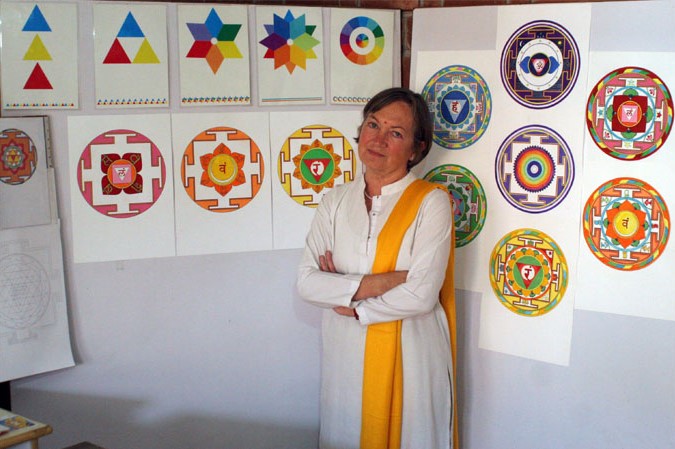
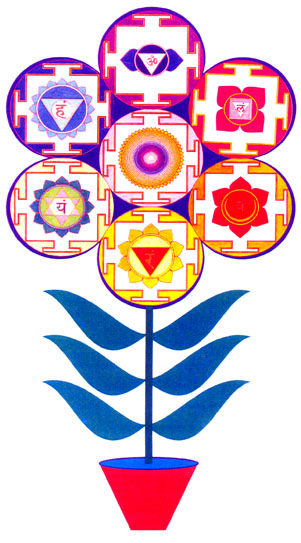 Cottage 31 was the setting for an inspired workshop this January. Radhika, SRSG Ashram’s sacred art teacher, guided guests and ashramites in the practice of dharana through painting the geometrical forms associated with each chakra.
 study of the Sanskrit alphabet, some Sanskrit mantras, the theoretical and experiential study of sound vibrations within the body, the use of mudras and the study of tantric painting. Tantric painting involves examining and creating visual representations (mandalas) of chakra points while simultaneously humming the associated sounds to activate that energy in the body.
 The evening of January 13th found everyone at SRSG gathered around a roaring bonfire. It was the night of Lohri, a popular harvest festival celebrated especially in the Northern parts of India. The festival marks the end of winter when the Sun changes its course. It ushers in the New Year calendar for Hindus. In addition to being a harvest and cultural festival, it prompts people to be thankful for God’s provisions. The festival is especially important to newlyweds and newborns. Young and old, rich and poor, all join in the fun.
 Swami Vachananda and Swami Ram Charit lit the sacred fire. Everyone then threw offerings of corn, peanuts, and sesame seeds into the fire. Drums were played and traditional songs sung. In addition, music played over the loudspeakers inspiring everyone to take up the beat. Some celebrants raised their arms in the performance of traditional dances called bhangras. Others linked hands and danced around the sacred bonfire. Everyone helped themselves to popcorn, peanuts, and candy made with sesame seeds and raw sugar. Indeed, the celebration was full of fervour and gaiety and enjoyed by all.
 In addition to the business meetings, there was a 3-day retreat organized by the Keningau Center, Sabah, on Yoga and Meditation for Pain Management. There were 60 participants from Sabah, Kuala Lumpur, Singapore, Taiwan, Hong Kong, Korea and Japan. Among the other teachers who taught on Yoga and Pain Management, Fuku Lida conducted several sessions to share many valuable techniques on Qi Massage and yoga manual therapeutics.
 organized and provided the vision for the conference. Rajah also attend the meeting of AHYMS-NA (North America) meeting summer 2008 held in Minnesota. Rajah noted that movement is afoot to form AHYMS-Europe as well. Regional Ahymsins create personal connections and offer mutual support for those who have much in common, much like one’s own family and neighbourhood within a city.
 2. Construction was completed by October and the Lab again opened its doors to guests, sadhakas, gurukulam students, staff, and visitors. All are welcomed by Manuel Fernandez, the Lab Director, and his two new assistants, Meena Bhatt and Sharada Panigrahi. Manuel, Meena and Sharada are now implementing the Lab’s programs of research, education, and community outreach and services.
 All guests and visitors to SRSG are able to take advantage of the various types of testing offered at the MRI. Comprehensive tests measure the effects of meditation on one’s body and mind, how deeply one can relax, or check diaphragmatic breathing. Guests may also receive biofeedback training to learn how to lower blood pressure, breathe more effectively for meditation, reduce migraines, reduce muscle tension or manage stress. There is a nominal fee for testing and biofeedback training.

