New Book: Guru Disciple Relationship III: Guru Purnima Messages

ॐ गुरुर्ब्रह्मा गुरुर्विष्णुर्गुरुर्देवो महेश्वरः।
गुरुः साक्षात्परं ब्रह्म तस्मै श्रीगुरवे नमः॥

Om gurur brahmā gurur viṣṇur gurur devo maheśvaraḥ,
guruḥ sākṣāt paraṁ brahma tasmai śrī-gurave namaḥ.

To that beautiful and benevolent Guru who is Brahmā, the Creator, Viṣṇu, the Maintainer, and Śiva, the Great Lord through whom all things return to their origin. To that Guru who is the direct experience of Brahman, salutations.
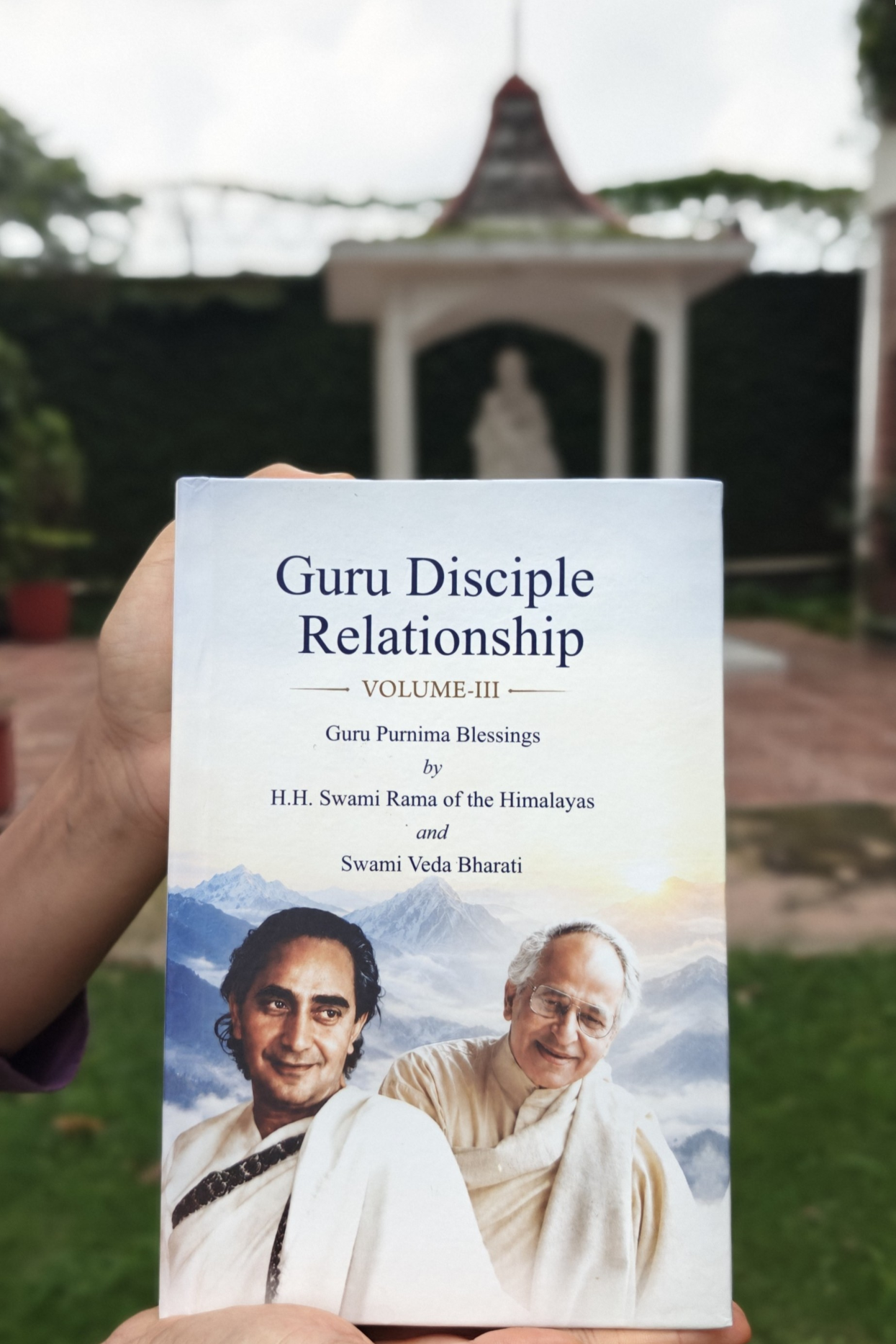
Guru-Disciple-Reltionship-Vol-3On the most sacred day of the Guru Purnima (29 July 2026), we received the most beautiful and precious gift in the form of a legacy book that bears the names of both venerable Gurudeva H.H. Shri Swami Rama of the Himalayas and our beloved master Shri Swami Veda Bharati (Mahamandaleshwar). Guru Disciple Relationship Volume III: Guru Purnima Messages was released on this day by Swami Ritavan Bharati.

This book is one of a kind, not only since this is the first ever book that carries the names of both Swami Rama and Swami Veda, but also because it brings together all the messages that we received from Gurudeva Swami Rama and Swami Veda Bharati from 1980-2014.

Swami Veda once asked Swami Rama after Swamiji’s Gurudeva had left his body,

‘Swamiji, you used to say you are always with your Guru. Now the Guruji has left his body, the Grand Master. Are you still with him?’

Swami Rama said, ‘Even more so.’ He said, ‘Because the barrier of the body is gone.’

As the veil, the medium of form has dissolved, the Guru is more immediate and ever so present. This book reveals the secrets and mysteries of a relationship that is most near and dear in the life of a spiritual seeker. Filled with timeless wisdom, loving guidance, and boundless blessings, these words illuminate the true spirit of the sacred Guru Disciple relationship and is a loving invitation for us to experience the Guru within.

Swami Ritavan Bharati has said,

‘These messages from Swami Rama and Swami Veda reveal divine whispers that awaken within you an excitement, an exhilaration—’Today the Guru might come’ and helps you attune yourself to a sentiment of “Presence”. Swami Veda speaks beautifully of this “Presence”, ‘Let the whole day pass in longing and in belonging; longing is the cry to fulfil the urge to belong, and belonging is meditation.’ Wherever you are, walking, working, speaking, let that secret love inside you keep burning, because you do not know on which day of your life that the Guru will come to bless you. That blessing is a gift of grace that descend into you, thus, no longer as an individual walking, you become the whole universe walking. Let these divine whispers remind you of the only ambition worth nurturing—the ambition to know your pure, infinitely loving Self. That ambition alone is an offering of reverent faith, reverent love to the Guru Lineage.’


Editor’s Note:

If you would like to receive a physical copy of this book, you may write to the Bharati Bookstore at hyptbooks@gmail.com. This book is available in both soft and hard covers.

For Kindle edition, you may visit – Guru Disciple Relationship Volume III: Guru Purnima Messages

If you would like to see more books by Swami Veda Bharati, kindly visit – Amazon Author Page
Satsang in Bengaluru with Swami Ritavan

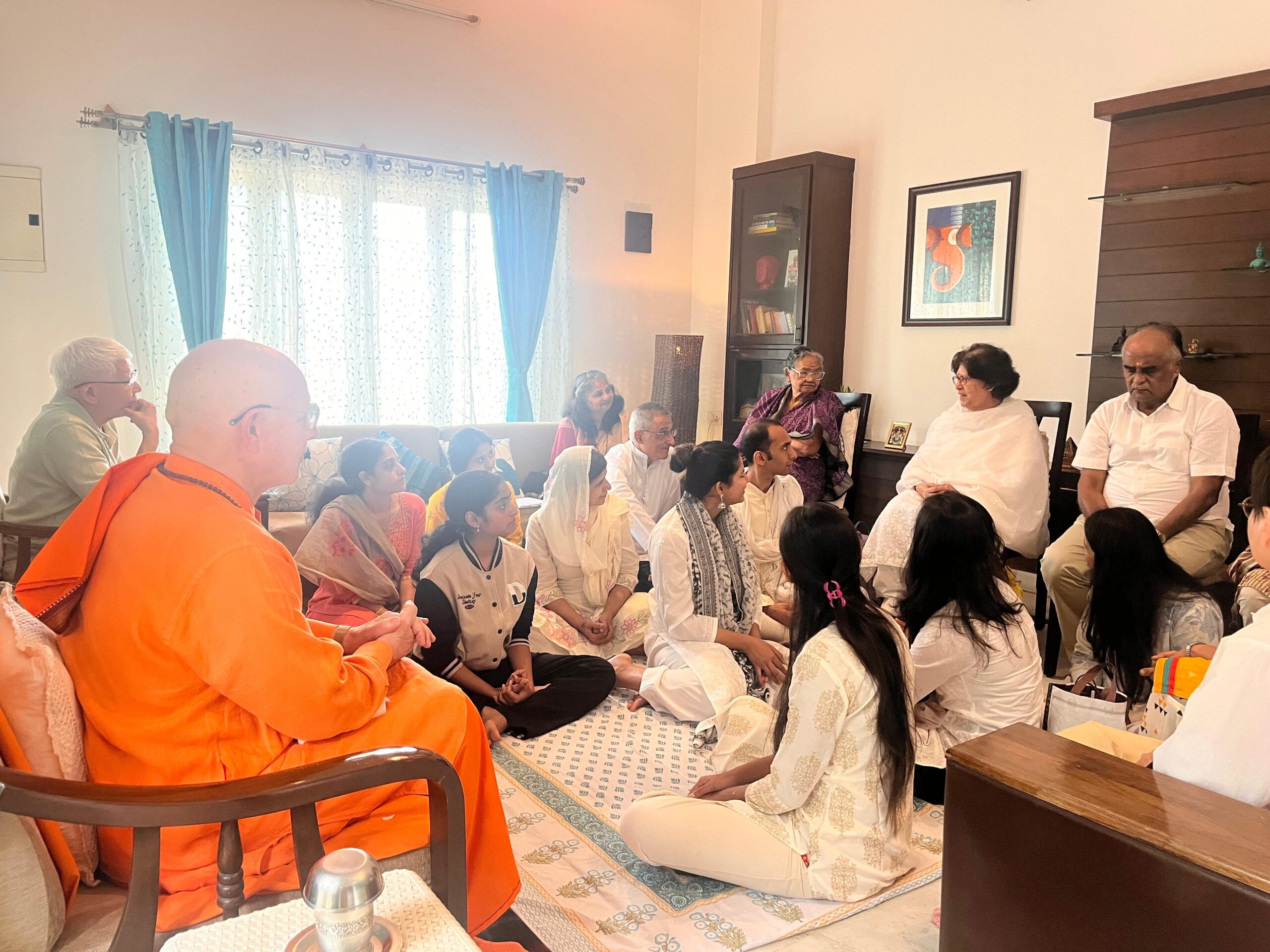
On a quiet Sunday morning in Bengaluru, an intimate gathering of spiritual seekers came together for special satsang with Swami Ritavan Bharati on a special visit in the city.

Satsang-in-Bengaluru-with-Swami-Ritavan

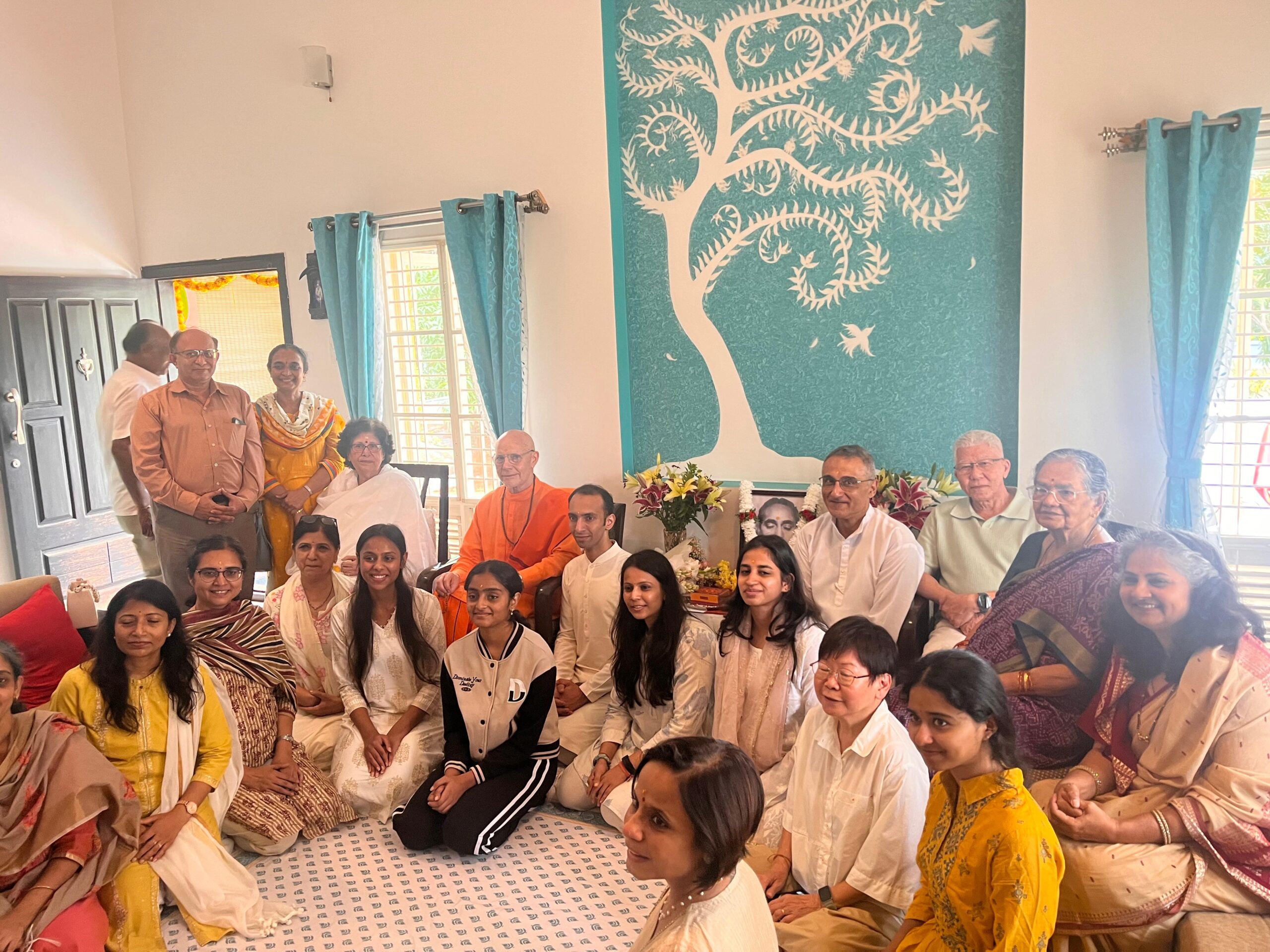
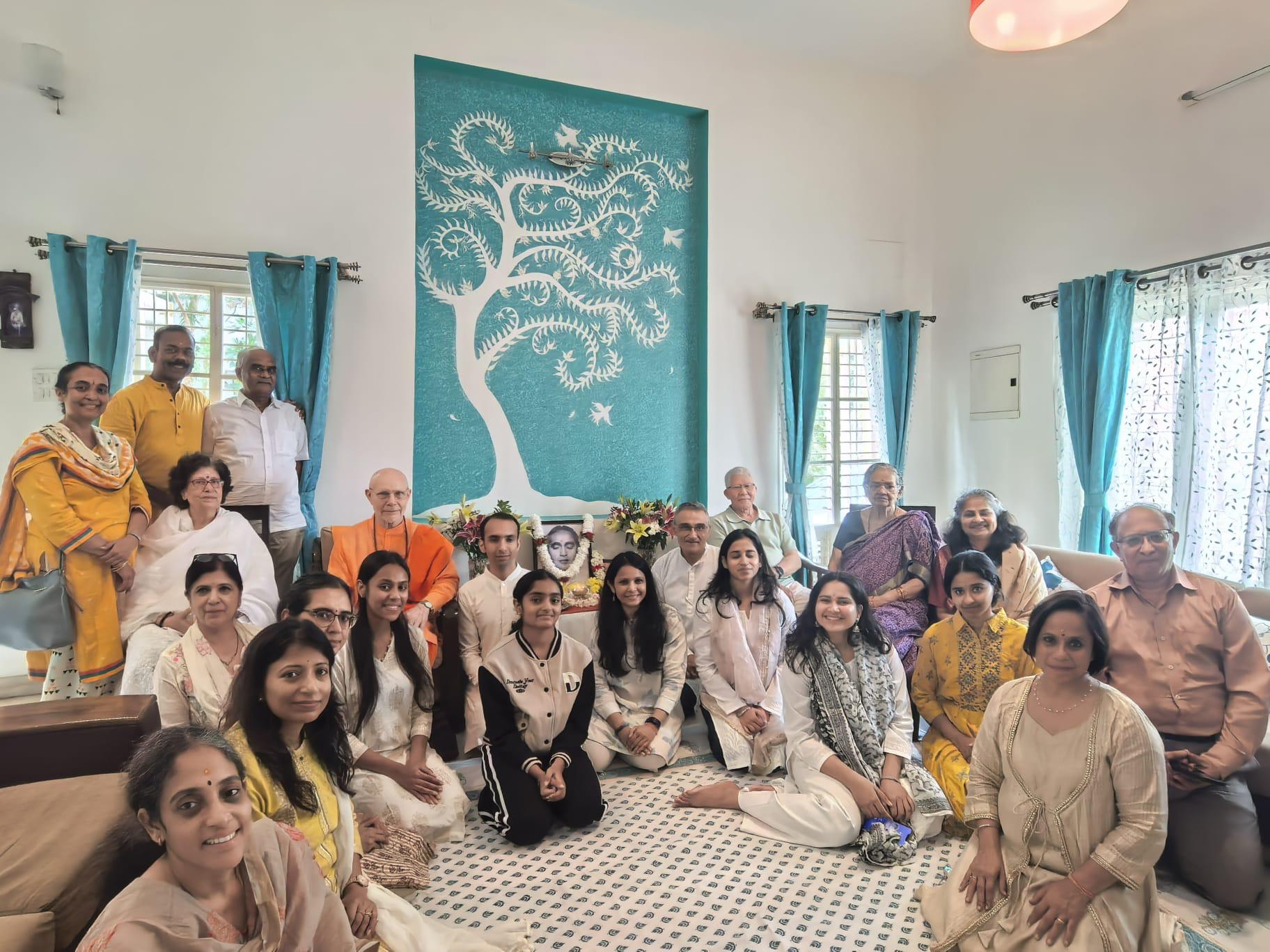
In the lush green courtyard at home of Namita Sinha; a long time initiate in the tradition about 25 sadhakas arrived with open hearts, ready to listen, reflect, and be inspired in the presence of Swami Ji.

The satsang began at 10:00 a.m. with Swami Ritavan Bharati, also accompanied by special guests from Singapore – Yoong Ji (mantra initiator in the tradition) and his wife Tuat Yien. Their presence added a sense of continuity and lineage to the morning’s reflections.

Swami Ritavan ji opened by illuminating the significance of the Guru–disciple relationship, drawing from the recently launched book Guru Disciple Relationship – Volume 3 of the series on this sacred bond. He spoke in the second-person approach common to Indian psychology to explain how the guru examines the disciple and, equally, how the disciple examines the guru. This mutual discernment, he emphasized, is not about judgment but about clarity, trust, and alignment on the path.

Swami Ji then spoke about doing dharma (duties) and the importance of paying off karmic debts in daily life. Whether in corporate offices or university settings, he noted, our duties become sadhana when performed with awareness and love. The spiritual path, he reminded, is not separate from our everyday responsibilities; it is woven into them.

Satsang-in-Bengaluru-with-Swami-RitavanFollowing Swami ji’s guidance, the satsang invited experiential wisdom from Jata Bhagat Mata ji, a long time sadhaka in the tradition and who was initiated by Gurudev Swami Rama served in his tradition for decades. She shared her experience of surrender before Gurudev—how that surrender brought her deep peace even after the loss of her husband. Her words carried the quiet authority of lived truth: that surrender is not weakness but the doorway to an unshakable inner refuge.
Yoong Ji shared his reflections about the push and pull of life; the tensions, contradictions, and turning points that shape us. He reflected on what it means to love, and how love transforms when duties are done lovingly for the guru. He recounted an anecdote from his younger days: once, while expecting Swami Rama ji’s presence, he grew short-tempered and upset. That day, he sat to meditate in that turmoil and the peace he encountered could not be substituted by anything else. Gurudev, he said, helped him realize that peace is most essential precisely in the midst of chaos.

Satsang-in-Bengaluru-with-Swami-Ritavan

After these heartfelt sharings, the group went into a natural silent meditation for deeper reflection and introspection. In that stillness, the morning’s teachings sank from the head to the heart.

The satsang concluded with the distribution of prasada by Namita to all the spiritual sadhakas present—a simple, loving ritual that marked the end of the gathering and the beginning of carrying the morning’s light into the week ahead.

In a city that moves quickly, this satsang offered a gentle reminder: that community, lineage, and shared sincerity can create a sanctuary anywhere even in a green courtyard in Bengaluru where the heart remembers its true home.


Editor’s Note:

Dr Kashish Pandey is an initiate within the Himalayan Tradition, and a Sports Psychologist and a Psychology professor by profession, based in Bengaluru, India.

Meditation is Washing the Mind

Meditation is the process of washing the mind. It is the way of removing the residue that clouds the clear mind sullied by the different kinds of impressions and reactions. These are all psychological handicaps. They are unconscious habit patterns of your mind that prevent clarity and understanding. They prevent you from rising above your conditioned mind.  A person who is on the path of self-discovery, and understanding, gradually, slowly, by constant self-observation, dis-identifies with his or her psychological conditioning. Meditation when going inside, quiets and cleans the mind, so that the Self will see its own reflection within the personality clearly. When it is not seen clearly, then it is bondage. When it is seen clearly, then it is freedom and liberation.

When you study the functions of your mind, you understand that manas creates doubts. The buddhi resolves them. The buddhi sorts out what manas feeds by way of perceptions & cognitions. And by sorting it out it uses its power of “viveka”, discrimination, judgement and decision-making. How does the buddhi function inwardly?  When it goes inwards, it draws from the huge reservoir of higher knowledge by way of revelation, inspiration, creativity and intuitive knowledge understanding.

In whatever way a particular events condition your mind, and causes whatever reaction from you, there is freedom of will. Freedom of mind is infused with a spiritual force. Atman is the abode of the freedom of will. That freedom of will is filtered into our mind’s functioning.

Another thing that happens along the path is that you learn to take your psychological experiences, memories and impressions and look at them. In one way, they seem difficult and challenging. Yet, through this infusion of a spiritual force, You realize one principle: since divinity is all-pervading, all weakness is a weakening of some strength. Thus, begin to discover a deeper source of satisfaction that arises from one’s own true nature (svabhava). This is a valuable insight and an ambition worth cultivating. Not only through still and silent meditation, but also through meditation in action. In your daily life, through awareness and self-observation you train your mind to strengthen certain natural urges within oneself. Some of these natural urges are:

To love,

To give,

To share,

To seek knowledge,

To forgive,

To be patient.

We have the freedom to act from the above-defined strengths of the mind, The sattva in us constantly strives to overcome the rajas and tamas. Let us re-discover this divine within that alone is our true nature.

The true Self, the real life force and the consciousness force.

Ko ‘ham, Who am I? So ‘ham, I am That.