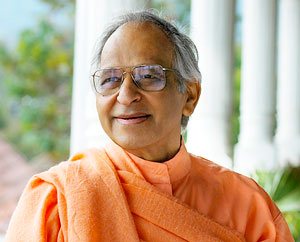
Why Families are Important

I also talked with many sincere people who sought to follow a spiritual path while creating loving family lives in the world. Sometimes I have found in these married people a greater level of spiritual awareness and sincerity than in those who live monastic lives. There are many sincere and dedicated people in the modern world, East and West, who are trying to follow the path of a practical spirituality. They meditate and also fulfil their responsibilities to their partners, children, and the society in which they live through their selfless, active lives. Whenever I wanted to know whether a couple was genuinely happy and content, I would tell them, “You seem to be very happy,” and then the reactions on their faces would tell me whether they were truly loving with each other, or whether their polite behaviour was only superficial.

I have also seen many changes in the past twenty years, both in the East and in the West. There is increasing violence everywhere in the world, a crumbling of the foundations of society, which creates many problems – rising rates of divorce and family conflict, problems with alcohol and drugs, and the inability to raise healthy, balanced children. There is also a pattern of greater stress, which challenges the physical and emotional health of even those who do not exhibit the most disastrous social problems. We look at our world and wonder how we will create peace and freedom. We want to successfully fulfil our responsibility to train and educate the children, those tender buds, who are given to us to nurture and raise.

In answering these questions it is clear that family life is important, because the foundation for life is established in childhood, especially in the first seven years. This sets a pattern for the duration of the rest of our lives. A great man once said, “Give me only the first seven years of life; the rest you can take.” He meant that these first years are of the greatest importance in determining the course of life.

If childhood is healthy, then we have established a good foundation as human beings, and we are able to care for ourselves, contribute to society, and share our love with others. This means also that we can take the next step in life, the step of being able to explore the spiritual dimensions of ourselves. However, if these first years of childhood are unhealthy, then they create problems and conflicts that we must overcome later in our lives, and which may even interfere with our ability to attain our goal. It is possible to resolve these problems and conflicts, although to do so may consume much of our adult lives. But life is like a school, and we cannot go on to the next level until we have completed the basic lessons. Families are the central training grounds for the entire life, the first step in a child’s spiritual development. Parents are their children’s first gurus, and if they complete their duties wisely, then the child moves on to other levels of learning.


Editor’s Note

Excerpt from Love and Family Life by Swami Rama.

Our Tradition

Our tradition has the following orientation:

  1. One absolute without a second is our philosophy.
  2. Serving humanity through selflessness is an expression of love, which one should follow through mind, action and speech.
  3. The Yoga System of Patañjali is a preliminary step accepted by us for the higher practices in our tradition, but philosophically we follow the Advaita system of one absolute without a second.
  4. Meditation is systematized by stilling the body, having serene breath, and controlling the mind. Breath awareness, control of the autonomic system, and learning to discipline primitive urges are practiced.
  5. We teach the middle path to students in general, and those who are prepared for higher steps of learning have the opportunity to learn advanced practices. This helps people in general in their daily lives to live in the world and yet remain above. Our method, for the convenience of Western students, is called Superconscious Meditation. I am only a messenger delivery the wisdom of the Himalayan sages of this tradition, and whatever spontaneously comes from the centre of intuition, that I teach. I never prepare my lectures or speeches, for I was told by my master not to do so.
  6. We do not believe in conversion, changing cultural habits or introducing any God in particular. We respect all religions equally, loving all and excluding none. Neither do we oppose any temple, mosque, or church, nor do we believe in building homes for God while ignoring human being. Our firm belief is that every human being is a living institution or a temple.
  7. Our members are all over the world, and for the sake of communication, we also believe in education. Our graduate school imparts the knowledge by the sages, thereby fulfilling the inner need of intellectuals.
  8. We practice vegetarianism. We teach a nutritional diet that is healthy and good for longevity, but at the same time we are not rigid and do not force students to become vegetarians.
  9. We respect the institution of the family and stress the education of children by introducing a self-training program and not by forcing our beliefs, faiths and way of life on them.
  10. Our trained teachers systematically impart all aspects of yoga relating to body, breath, mind and individual soul. Awareness within and without is the key, and the methods of expansion are carefully introduced to the students.
  11. To serve humanity, we believe in examining, verifying, and coming to certain conclusions regarding the yoga practices, including relaxation and meditation.
  12. Our experiments are documented and published for the benefit of humanity.
  13. We believe in universal brotherhood, loving all and excluding none.
  14. We strictly abstain from politics and from opposing any religion.
  15. Of great importance is the practice of non-violence with mind, action and speech.

Editor’s Note

Excerpt from Living with the Himalayan Masters by Swami Rama.

First Initiation

A member of our ashram has asked me a question about a certain experience/initiation. He asks what I was like before and what did I become after that experience? I cannot say how long it would take to give full answer to this question. So, as briefly as I can, I shall summarise the long answer.

  1. Because of intense gayatri-japa of my parents as preparation of conceiving me
  2. Because of my father’s story of his initiation and about his guru
  3. Because of daily practice of pranayama, dhyana, sandhya twice a day from the age of four and a half
  4. Because of my father’s resolve that his son should grow to be a rishi
  5. Because of his sankalpa to protect me from all exposures to the common world and its experience ( for example, I was not allowed to play with other children and I still do not know what happens in this mysterious ritual called ‘cricket’)
  6. Because of continuous exposure to the stories of yogis — earliest being Swami Dayanada Saraswati and Swami Ramatirtha – that continued as a habit though all early years
  7. Because the only education was in vyakarana, Nirukta, Vedas which was completed by the age of 13

my inner identification was always with Himalayan yogis; there was always an awareness that I belong to them and would one day find them or they would find me.

I recall, at the age of six, walking with my father and saying to him, “let us both go and become swamis”. He hushed me up then.

It was during these years that ‘knowledge’ often dawned on me and my mind always attributed that dawning to the unknown yogis of the Himalayas. It is thus that I learnt, through experiencing spontaneously, the practice of relaxation and yoga-nidra, not knowing that that is what they were called.

Reading the Gita and the Upanishads was at that time almost a disappointment as my only reaction, my question, was “so, what is new in them?”

That is how the different levels of the meanings of the Vedas were revealed to me.

There was always a knowledge that as I grow, I would be teaching worldwide but at the same time would be blessed by one or more Himalayan Yogi.

At age 13 and a half, I was officiating as Brahma of a Yajurveda-parayana-yajna in Ludhiana where vidvaan scholars from many parts of India had gathered. They questioned me for two days in the chambers about my knowledge of the Vedas. Then they wrote articles about me in the North Indian Hindi press.

I began to receive invitations to travel and lecture and addressed large crowds throughout North India. This pattern of life, of non-stop travelling and lecturing, began in February 1947, some months before the independence and partition of India. This has been the pattern for the last 65 years. The first two and a half years, till mid-1949, I travelled with my father under his protection.

In those days of travel my daily time table was: after waking, going out in the fields (in whichever town), bathing at some canal or kuaan (water well) — which were clean and common in those days — sit under a tree to do pranayama and dhyana. Walk back to the residence, have a breakfast. Open my books – I used to travel with 500 books – and study. Have lunch. Take a rest. From 3-5  p.m. was open hours for anyone to come for ‘darshan’ and ‘satsang’, to ask questions and receive answers. Then go for evening walk. Short evening dhyana. Return to residence. Have dinner. Give evening lecture. But some time there were even 3 sessions a day. I recall giving 49 sessions in seven days in 1950.

Back to the end of 1947. In the city of Bareli (spelled Bareilly in those days), as I was preparing to go for the regular evening walk with my father and the hosts, a small group of visitors turned up and asked to walk with us. My father readily agreed. When such beings appear, all logic, argument or resistance stops. You find yourself saying YES to anything they suggest. It is possible that my father recognized that they were higher beings.

On the return from the walk, in the middle of a dirty lane (gali) of Bareli, the leading person – whose name is not known to me — grabbed my head and shoved the middle finger of the right hand at my ajna chakra. Such an intense electric jolt passed into me that it was almost unbearable and I resisted but my father said not to resist, so I surrendered.

We walked back. They did not stay even for a glass of water. Where they came from, I do not know. Where they went, I do not know.

No, there was no major change in my person. It continued with the same life pattern, except that the electric current continued to be felt repeatedly at any time of the day and night and more so during meditation. In fact, thereafter, a meditation session did not begin with pranayama but with the feel of that sensation that helped one to go inside and do the pranayamas and sandhya from there.

One of the many results of such diksha is that the mantras become a fast mental vibration rather than a vocal observance. The time it takes others to recite one mantra, such an initiate ‘recites’ (vibrates) 20 or so mantras.

The wait for a guru continued. Expectancy. Often an experience of the presence that lectured through one. Dream of the Himalayan master. Guidance often as to the next steps in life. And so on.

It is a long story about meeting my gurudeva, Swami Rama of the Himalayas. Many months before he gave me the real initiation, he gave some preparatory initiations. I told him of the Bareli episode and the vibration I felt in my ajna chakra. He smiled and said “abhee dekhte raho kyaa kyaa hotaa hai” (keep watching yet what and what more occurs). He gave another ajna chakra initiation where the current and vibratory presence was of 100 times stronger. This is few months before the highest initiation. I am not at liberty to detail everything.

I asked him about who might have been the great guide who gave me that first ajna chakra initiation. He said “pahaaDee Baba honge” (It must be Pahadi Baba). I have heard that name, Pahadee Baba, several times from my master over the years but no explanation as to who he is, where he resides, from where he appears and where disappears.

After the Guru-initiation on 26th February 1970, I have continued to move fast to my present station and there is a long path yet to traverse.


Editor’s Note

For more about mantra initiation, please see https://www.ahymsin.org/main/index.php/Himalayan-Tradition/initiation.html

Virat-Atma Meditation

(Meditation Transcription)

Mind, becalmed as a smooth flowing stream
that smooth mind stream flowing through all the senses.

That smooth mind stream flowing as the path of prana energy unblocked.

Mind stream flowing smooth through your entire person.  From the Mount Kailash of the high Himalayas — the seat of your mind.

From the Mount Kailash, of the high Himalayas, of the seat of your mind, a flowing consciousness stream like a cool shower cleansing, washing, soothing, enlivening every cell of your body all the way down to the seat of your body and the soles of your feet.

A cleansing, purifying River of Light — the Ganga of the mind,
a sacred presence within you,
A sacredness that you are.

Feel the sanctifying flow of this River of Light from the seat of your mind, to the seat upon which you sit.

And from your adhara to the seat of your mind, a subtle, sacred flow of consciousness, divine life, mind, mantra, prana, breath.
Maintain the identity of your being with this sacred, flowing River of Light.

Having purified your entire body-like mountain, transformed as a crystal-like mountain of light,

Now draw your attention to the pilgrimage of your ascent.  Let your consciousness rise from the feet to the muladhara – your very earth.

From the earthly realm, now rise through the realms of:
water,
fire,
air,
space,
The realms, of:
swadhisthana,
manipura,
anahata,
vishuddha – the sky realm.

Now dwell only in that sky-realm.  From the realm of this antariksha akasha , the sky space of interior vision, ascend to swar-loka, heavenly realm above the space of the throat centre.

Dwell in the crystal-like mountain-top, the seat of your mind.
Pure consciousness, divine life force — identifying with it,
knowing your self to be that.

The divine infinite life force and consciousness sends forth the grace of the mantra to your mind, you heavenly seat.

Divine life, consciousness, mind-mantra, alone, as your true self.
Be that.
Know that.
Sense only that.
Awaken that seed of Consciousness-bindu, as your only sense of awareness.

No disturbance of the arising of thoughts or desires.
Here there is total calm, pure mind, soundless-mantra, consciousness, none else.

Make a sankalpa, a quiet sacred resolve to ever be this heaven dweller.

Dwelling in this swar-loka.
Remaining a heaven dweller at all times.
Mantra alone your mentation filling the entire Himalayan height of the Kailasha of your skull.

If you dwell here centered enough, deeply enough, long enough, it is the promise of the sages of the lineage that they will meet you here in the form of a conscious light.

Seek that union,
aspire.
Calling upon them with your mantra,
calling, calling, calling;
and now in silence…

Maintaining the sankalpa, the resolve to ever be a heaven dweller,
Yet,
bring your heavenly consciousness to permeate your exterior realms,
from this mantra-infused realm of your heavenly mind.

Now, letting your prana-breath flow through your spine.
This breath becoming the meru, the streak of lightening flowing in the heavens whose energy is absorbed in your sacred body-mountain.

Now, letting your prana-breath flow through your nostrils.
This breath becoming a setu, a linkage between your interior heavenly realm and your exterior realms of the body-polis.

Maintain the flow.
Remaining in your heavenly realm,
still traversing your breath bridge
as you come to your exterior senses
and gently open your eyes.

Remain the dweller of both worlds through the linkage of your breath, the linkage, the channel that brings the luminosity and the calm and purity of heaven into your senses.

Be in this quiet joy even with your eyes and other senses open;

Dwelling in the Crystalline mountain of your being.
Om sham
OM peace


Editor’s Note

Adapted Transcript of a Guided Meditation led for the Teachers Training Programme of the Association of Himalayan Yoga Meditation Societies International (AHYMSIN), held at the University of St. Thomas, St. Paul, Minnesota, USA, on 18th July 2011 by Swami Veda  Bharati

Swami Ritavan writes, “It truly was the inspiration for the pilgrimage that all began with this deep interior experience of the mountain-top of consciousness, the homeland of Being – the Virat-Atma.”

Tinyu Chen, Swami Ritavan, and Yoong took and led a pilgrimage to Mt. Kailash in October 2011.

The Human Being Is on a Pilgrimage

“The human being is on a pilgrimage. His goal is the eternal abode, where he finds perfect happiness, peace, and bliss. The ignorant ones who consider this earth their permanent abode are deluded. Every moment of life until one reaches his eternal is precious. Therefore one should remember the Lord in every moment. That practice is called ajapa japa. Those who remember the name of the Lord in every breath of their lives are the fortunate few. When a student learns to remember the name of God in silence with a one-pointed mind and strengthens that habit, he can continue practicing anywhere and everywhere he goes. Thus ajapa japa leads one to constant awareness of the Self, which helps him during the period of departure.” –
Perennial Psychology of the Bhagavad Gita

Swami Rama writes further about ajapa japa in Choosing a Path:

“In the path of bhakti one of the easiest practices is to remember God’s name – a mantra or a word – constantly. Ajapa japa, remembering God’s name constantly, becomes a part of life and makes one aware of the Lord all the time. Constant remembrance makes a deep groove in the unconscious mind, for the unconscious mind is actually the seat of habit formation. Once the habit is formed, then it becomes part of individual life. Ajapa japa is that state of remembering God’s name in which a devotee does all his duties, yet remembers God all the time, even during sleep. It is an effortless way of remembering God, but a constant and long practice of japa is necessary. Those who have formed a habit of ajapa japa enjoy inner silence without any effort. They do their duties and remember the Lord’s name all the time.”


Editor’s Note

These are excerpts from Perennial Psychology of the Bhagavad Gita by Swami Rama and published by the Himalayan Institute Press in 1985 and Choosing a Path by Swami Rama and published by The Himalayan International Institute of Yoga Science and Philosophy of the USA in 1982.

You might also enjoy reading the chapter “My Grandmaster in Sacred Tibet” in the book Living with the Himalayan Masters
by Swami Rama.

Svaha: On Giving Up my Father

swami_veda

I am not this, consumed by flame;
I am not that, washed in water;
I am not that which drew air,
nor am I that which walked upon the earth.
I am the earth, I am the air and I am the water.
I am the fire.
All that which is impermanent, I leave behind.
Svaha svaha, svaha, it is no more mine.

My father is dead. I watched it happen, as he performed his own funeral service on the banks of the Ganges. I have heard that Sanskrit (Hindu) phrase, svaha, idam na mama: I make this sincere offering: it is no more mine, over and over again, my entire life. It is said with every offering given on the altar, into a consecrated fire or sacred river. In my family, it is said with humor and resignation, over opportunities or items lost. Svaha: our mental shrug: Oh, well, it’s gone. I may as well let it go.

That ceremony transformed my father, my Tata (daddy), into something else: a Swami, beyond definitions of family, gender, religion. He began a journey away from me and mine, and sought a life of service. Swamis were not a mystery to me; I grew up with Baba, a guru who initiated me into our tradition when I was six years old. I felt lucky, even as a kid, to know him. He made a family of everyone who needed one. He made the world magical.

When I was nineteen, my dad, struggling with diabetes and a heart condition, was given a last chance by the doctors: a triple by-pass. This was back in the days when heart surgery was a thing of fear and miracles. In the voice that lulled me to sleep as a child with countless guided relaxations (oh, how I relished being able to make him yell when I was a teenager!) he told me that his life was coming to an end, one way or another. He wished to survive, but if he did, it would not be as it was. It was time. He would begin the process of transition towards Swamihood. My mother would care for him after surgery. They would live together as brother and sister for a time. They would part eventually, husband and wife no longer. Not divorce, he stressed, as though I didn’t know. He would renounce his former life, his family.

Our father was leaving us for God.

It seemed natural that this was happening. When he said that he would need his children’s formal blessing, I was startled, as if he was asking our permission to stay out late. I must have talked about it with my siblings, my friends, but I have no recollection. I don’t remember feeling rejected or abandoned. It was actually kind of exciting, as if he had won The Nobel Prize or something. Tata was ours, but never only ours. We always shared him with so much, his books, his disciples and his mission. Much was shared with us in return.

Watching him chant his own funeral prayers was another thing. His familiar voice rising and falling, rising and falling as he sang the ancient hymns. I remember sitting in the mild mountain sun, catching my brother’s eye, and thinking, our father is dying.

I am grateful for the Swami who rose from that pyre, although it took awhile to sort things out. What do I call him? (settled on “Tata Swami”) How do I introduce myself? I can’t say “I’m his daughter” anymore, can I? Or can I? There were a few awkward years where no-one was sure how to behave, what was acceptable. This was new territory for all of us. I avoided him.

My relationship with Swami Veda Bharati is very different now, but that’s to be expected, I’m not a teenager anymore. I got over my joy of being able to make him raise his voice. Instead I have found pride, solace and inspiration in watching him become. My father had always been a teacher, but a Swami is something more. And he has become more to me than a father. I look forward to the few times a year that I see him, long nights when we sit up and talk. We have an ongoing debate: Are things as they always have been, or does the world really change? We argue but also laugh a lot. He still loves to tell jokes, most of them based on awful and elaborate multi-lingual puns. Through Swami Veda, I have finally gotten to know my dad.

No matter what paths I walk, they are extensions of an ancient tradition. I believe the teachings of the mountain sages, teachings repeated in many traditions. Teachings spoken by priests and shamans and druids, wisdom based on experience of living: Know thyself. Let go of what limits you. Respect others. Swami Veda has brought that to countless people. He has acquired the weighty title of Mahamandaleshwara, a Swami among Swamis, and has been involved in global interfaith and reconciliation work that proves, as he puts it, the human urge towards peace. I may only see him a few times a year, but when I am really in trouble, it’s his phone that rings in the night, where ever he is. When I sit down to meditate, it is his voice in my head…relaaax your shoulders…breathe deeply, slooowly, smoooothly. The echo of the father I let go.

I don’t think it will be so easy to let Swami Veda go, which is ironic. Not today or tomorrow, not in the next six months, but, holy or not, he is going to die, to make that final life change. I have seen it, under the mountain sun. This time, I am afraid. When Baba died, I knew there was no-one who could replace him; but we had Swami Veda. I had Swami Veda. When he is gone, who is left? Who will be there for me? And I find when I ask that question, I have trouble meeting my own eyes; for who is left is looking back at me. You skirt around it in your own way; for me it comes down, bluntly, to selfishness. I want mine, my life, my choices, my freedom. I wanted my father. I want the illusion of owning my life…even if I know it’s an illusion. But I am a child of our tradition; I am my father’s daughter.

The voice in my head has become my own. There is no “one” who will take over, who will be Our Father. Who will be mine. It is exhausting to fight your own truth; I imagine it must be a great relief to finally, totally, just be yourself. I understand why traditions of self-knowledge are not so popular. Revelation can be very disruptive. Compassion is extremely hard work. Surrender takes pain and practice. But our voices are useless if we don’t share them. I grow tired of the bondage of mine.

I know I am not this that walks, breathes, which someday will be washed and burned. I hope that I will have the strength to look at this life I have hoarded so selfishly and be able to someday say, with relief, svaha, it is no more mine. And then live it.

Challenges on the Spiritual Path

To a person who is increasing his or her commitment or intensity of their practice, the worldly situations will start testing your faith, commitment, and your determination. You will all of a sudden start to see things becoming difficult in every aspect of your life. Starting from family, spouse, kids, vehicle, work, boss, your own meditation – everything will have a challenge all of a sudden.

From a spiritual point of view – it is positive. Those are good signs.

But from a worldly point of view, it’s a hassle – it’s difficult.

You will think, “Why am I feeling this? I am meditating and I am doing my mantra and everything is becoming difficult.. Why is this happening?”

That is where we misinterpret. We think that things will get better by our meditation, but things may get worse before they get better. And so challenges upon challenges upon challenges appear.

A spiritual seeker sees it as an opportunity to GROW and to Purify, to expedite the wheel of Karma, and to pay off your Karma quicker. The karmas that would take ordinary people one year to pay off are happening in one day.

Everything gets challenged and everything is challenging.

From physical health, relationships or work challenges – deal with that challenge within your capacity and knowledge of what needs to be done.

When a challenge comes into your life, there will first be a reaction that comes; maybe it’s anger, maybe frustration? Become aware of that reaction. That is the human reaction and is normal. You shouldn’t actually ignore and suppresses this reaction and you can immediately come to watch the reaction.  Then the third level comes in – the law of Karma – and you can ask yourself ‘What is in my duty to do?”

As challenges come, tell yourself that it is an opportunity to go through the fire. A goldsmith puts the gold into the fire- it’s a difficult process for the gold, but at the end that gold shines. When you go through the fire, then only the light comes. See those challenges or difficulties as a part of your spiritual progress.

Swami Veda says that whenever he gets sick first he thanks the Lord himself so that he has the opportunity to close himself and he goes into silence. So each time he has pain he just closes his eyes and he thanks that now I have an opportunity to look within more.

Any time that a difficulty arises, think:

  1. Acceptance as an opportunity that you are paying your debts faster and quicker
  2. Purification
  3. Remember this will pass because you are moving forward so that state of yourself will never stay the same.

Editor’s note:

Pandit Hari Shankar Dabral, Ph.D., is the Spiritual Director of The Himalayan Yoga Meditation Centre in Calgary.

“I’m telling you of the joy I have experienced.” – An Interview with Nina Johnson

swami_veda

Nina indicates that she only teaches what she experiences.

She was an only child.  She took care of her Mother who passed at the age of 107.  Her husband was quite ill during his life.  While she would care for these two relatives, she felt sorry for herself.  These two relatives passed in the same year – 2005.  Thereafter, she was totally free to pursue her spiritual practice.

Her first India trip was in 1974 for the Kumbha Mela.  The next time she went was in 2006.

When she arrived in India for the third time, Nina was anxious to advance her practice quickly.  She was surprised to hear from Swami Hari the remark to do her mantra and sleep.  She was disappointed.    Yet she did her mantra and slept and later contemplated and read yoga books.  Her practice improved.

A lot of her friends by now had gone or were old.  She abandoned grumpiness.

She recommends to householders that they tend to their family and work and get their yoga practice in anyhow.  When kids were sick, she also got sick.  She was glad when school was out because the sick periods disappeared.  She continued to do her practice.

She recommends that you lay the groundwork.  Writers say when you reach enlightenment, all care to leave.  She is very happy.  How did she reach this stage?

Nina’s comments:

As a householder, you are like a juggler, multi-tasking.

There is no magic to spiritual progress.  No instant enlightenment.

Brother Lawrence, such progress in his book.  It is like a tree branch in winter…looks dead but isn’t.  Make a resolve to serve.  Brother Lawrence joined the Carmelites.  His adviser told him to practice, and he felt God was with him all the time.  Brother Lawrence worked in the kitchen and was not a scholar.

In the beginning, it is hard, arduous.  For example, in India during cold periods, there is no heat in the room, no real electricity in remote places; solar heat is not effective.
It is not a vacation.  [She has spent 6 years of practice in rather austere environment.]

Yet the Himalayan Mountain foothills is the Land of the Gods, a special place.  Because of the mantras and their vibrations, one senses a spiritual haven.

People are kind to the sadhakas, the students seeking spiritual truth.

Watching the native people, foreigners see how hard it is for families in the foothills.  Women carry on their heads and shoulders great weights.  Even while pregnant, they walk up steep slopes.  They deliver their young without medical personnel.

They have adversity; parasites are quite common in their systems.  It is rare to see an old native woman because of their adversity.  Schools are canceled because of landslides.  The men are gone to far-away villages for work.  Bugs, rats, and crawling creatures are common.  We intrude on their homes, and their environment.

Yet sitting on a chair on a 2nd-floor veranda, there is something magical about the mountain vista.  The mantra comes, easy to meditate.

I say, students, your time will come!  You need to have good soil to grow anything; same in spiritual practice you need to have good soil…you cannot rush things.  It’s a process.  Give your best and you still may think: I’m not getting anywhere.

Keep the practice going.  How can I fire you up?  I’m telling you of the joy I have experienced.

In the past, I dragged a lot of garbage with me into my practice.

Swami Rama would say: “That has to pass”.  You’re missing the now if you only dwell on the past or on the goal.

Nina recalls in 1965 when she was a young student, her first hatha yoga teacher instructed her to peel the potatoes, focus on peeling the potatoes, and nothing else (no distractions).  The same instruction applies to your practice.

Do everything conscientiously.

Another anecdote:   Observe the second-hand clock’s tip and observe its movement without thought. Be centered on the second hand with total concentration.  When a thought comes, go back to focus on the second hand of the clock. You can’t do that for more than a few seconds.

Swami Rama says the Bible indicates: Be still and know that I am God.

If you are going broke, you won’t fool around.  Lay all Karma on Swami Rama’s shoulders and just let go of all expectations.

When she dies, she wants to be left alone.  For example, in India, it is okay to quit eating.

She recommends avoidance of all the Western life-sustaining measures at death’s door.  Dying is ok.  She’s having a marvelous time.  She has no visions.

She was born Baptist; there were pieces missing in her spiritual upbringing.  She never considered what Asia could offer.

Swami Rama told her: Your Jesus came from the East.  When he finished his commentary on the Enlightenment without God book, Nina told him it was a terrible title.

Swami Rama replied to her:  You will know where you’ve been; you will know where you will be; you will know where you are.  You will have great joy! Do you need God then?

Feel total surrender, by God.

Do your practice.  She does not always hit the jackpot…all the time.  She claims to know a little more, not a whole lot.

Practice your meditation.  Once upon a time, an Indian living in Louisville asked her: do you really meditate?  She replied no, and then described her practice and the nature of the mantra.  It turned out that the woman did not know more about meditation.

Many things may happen because of your practice…bad dreams, pain.  Empty your mind.

Let it come…it is part of the process.

Keep on doing your practice if you are serious like having another joyful job.  It is not easy, but a joyful job. It’s not a drudge.

What is the yogic passage related to death?

She replied: “beats me.” Many people die with desires.  There is the concept of reincarnation.  Life is like a pattern.

Swami Rama asked Nina:  Don’t you recognize me?  Her reply was no.

When your mother dies and your husband dies, then you come to me!

Swami Rama was gentle.

Keep doing the practice!

Death is sweet. She professes no knowledge about dying but she cannot wait.  She indicates she has many fears about living.

We are just sort of covered [by the Himalayan Masters].

I have to get better, I know.  I’m not there yet.

Service To Our Elders As A Path Of Love and Spiritual Growth

Mother and Father are two eternal principles in this world. They’re two gods to the infant and are so important to us both physically and emotionally that the effects of our relationship with our mother and father reverberate throughout our whole life.

There is a quote from an ancient scripture of India that goes like this:  “The root of comfort and happiness is harmonious relationship and sufficient wealth. The root of harmonious relationships and sufficient wealth are wise choices. The root of wise choices is self-control. The root of self-control is humility and discipline. The root of humility and discipline is service to the elders. Through service to the elders, one obtains experiential knowledge and wisdom.”

Father’s Day is a good time to be thinking about this, about service to the elders.  What does service to the elders mean? Such service is not well understood in America and so this is a real question.  Service to the elders is a tradition in India, especially out in the countryside where people still carry on their traditions. The culture of India is one of the only cultures in the world that has been basically the same for thousands of years.

Service to the elders certainly wasn’t in vogue in America when I was growing up: It was the time of questioning authority and rebelling against tradition.  The idea never entered my mind.  I was unexpectedly led to this service.  Here’s the story.
When I had been married for a short time, my father and mother came to visit one time and Dad and I had a terrible fight. I don’t remember what the fight was about, but it was awful. He ran out of the house shouting, “You’re a rotten son,” and I felt terrible.

I felt so bad that I asked myself, “Who can I talk to?  Who can help me with this?” and ended up phoning the person who was the wisest person I knew, my meditation teacher, Dr. Usharbudh Arya (now known as Swami Veda Bharati). He was not an easy person to reach, always traveling around the world and attending to thousands of students.  Yet, somehow, I got him on the phone, told him about the terrible fight, and asked for his guidance. He said something so simple: “Learn to give your father reverence. Treat him with reverence.” I didn’t understand what that meant. Yet I heard and took it in.
Over many years after that, I endeavored to understand “reverence” and put it into action. This was a focus of mine, a living meditation.  I kept asking myself, “How do I treat my parents with reverence?”

It was hard for me to do this. Every time I’d get around them I’d feel like I was a little kid again, and I didn’t want to feel that way. Then I’d feel like they were telling me what to do and I didn’t want to have to do what they told me. So I had all these resistances. But slowly I learned.

I found that the more I accepted and loved myself, the more I could appreciate them as people just as they were, rather than wanting them to be a certain way. That was a big insight:  They were just people and they were who they were. Once I began realizing this, I was able to accept them and revere them as my parents, just as they were. Over time the relationship improved.

After about 14 years of doing this, I felt our relationship had gotten pretty good. Certainly, it was immensely better than it had been when Dad and I had that fight. Then something happened that took the whole process to another level.
I was on a long, five-month stay in India, and felt very concerned for my parents. I sensed they needed something and didn’t know what it was. So I’d call them every day or so just to stay in touch.

After returning to the States, I went back to my home in the woods near Santa Cruz, California, with a plan to go back to India.  In the meantime, I went down to L.A. to visit my parents and also to visit and help Swami Hari, a monk I respected and loved, who happened to be visiting L.A. at that moment. Several days were spent with him there.
One day, Swami Hari and I were together the whole day at the Canadian consulate so he could get a Canadian visa.  While we were there, I told him how my Mom had become mostly blind from macular degeneration and also had very bad osteoporosis, and how my Dad took care of her while running his business, even though he was well into his 80s. Suddenly, Swami Hari looked at me like a lion, with great intensity and gravity, and forcefully said “Now you should move to LA and serve your parents!”

I wanted to jump away from him.  The forcefulness of his statement was piercing.  “Are you out of your mind?” I said in exasperation. Yet, though I resisted outwardly, and inwardly I realized that while I did things for my parents, really it was very little.  My mind jumped from side to side.  “I serve my parents? Aren’t they there to serve me?” I thought.   Then the next moment came a thought that they had served me and had given me a chance to live and grow. They’d done so much for me.

In the midst of all of these mixed feelings, and a strong compulsion to get away from Swami Hari, who’d just turned my inner-world upside down, a plan developed in my mind:  The next three days would be spent with my parents doing everything for them, fulfilling every need, being their servant. This would be an experiment to experience serving them, and it would also get me away from Swami Hari.  So I said goodbye to the swami and went to my parents’ home and for the next three days I was their butler, their cook, and their driver; I did everything I could for them. At the end of that time they were glowing and I felt strong, deeply happy, and filled with energy.

I felt so good that I went back to Swami Hari and thanked him.  Well, actually, I said, “Swami-ji, I don’t know whether to kick you or to thank you. But a thank you is in order.”  He looked puzzled at first and then seemed to understand.

Based on the results of my experiment, I decided to move my home to L.A. to care for my parents and made the move in the next month or so.

After settling in L.A., another unexpected event occurred.  Up to that point in my adult life, I’d felt that something was missing from my father.  Actually, I felt he didn’t see me, as if I was invisible to him, and was always upset with him because of this.  I didn’t know how to get him to notice me and so wanted his attention.

At the time I was a lawyer. I’d say something about the law and he would ignore it.  At least I felt he did.  But the strangest thing happened: Once I became his helper, by being there for him instead expecting him to be there for me, everything changed.  He would banter with me. Then I realized that he liked to throw mild insults and have them thrown at him. Previously, when he’d say things like that to me, I thought he was just being cruel.  Now I realized that doing so was how he was with friends.  Bantering was his way of being with a friend.

Over a short time, our relationship completely changed and I got everything I’d always wanted from him, by serving him. There was this wonderful connection with him, this wonderful feeling of understanding who he was, and I knew he saw me. It was better than being his son. Now we were friends.

He liked being playful, and I came to appreciate him as a human being, with foibles, rather than expecting him to be perfect. That was a tremendous relief for me. It meant that I didn’t have to be perfect either.

It was in 2005 when I moved back to L.A., and as the years passed, the lessons kept coming.   In 2006 Dad had a stroke.  At the hospital, he appointed me as his healthcare agent, and I really felt trusted. Afterward, when he was back home, rather than the strong man he had been before the stroke, he was like a child, having to learn how to speak all over again.  He couldn’t run his business, and, rather than hiring someone, I took over control of it, and took on the role of caring for Mom and Dad.  This was a huge transition for me.  Although I was an adult and had been married, raised a child, and practiced law for many years, still I’d always known that Dad was there and felt I could fall back on his strength if necessary.  Now that was gone. At first, the responsibility seemed overwhelming, and I felt the weight of it every day.   Over time it became something I greatly valued.

Once things started leveling out after Dad’s stroke, suddenly, in 2007, my Mom died, and that pushed things to yet a higher level.

I’m still overseeing my 89-year-old father’s care, and spend most days at his home in the office where I manage the business he founded.  That same office was my first bedroom in that house more than 50 years ago. Now our roles are reversed.

Many times, in the deep recesses of my mind and heart, I’ve felt vast gratitude for Swami Veda, Swami Hari, and the timeless yoga tradition for guiding me onto the path of reverence and service to my elders. Doing so has given me great treasures that I could not have found elsewhere: The chance to care for my parents when they needed help, and the growth that has come from doing so.

Based on my experience, I recommend service to elders as a practice. It’s true that the requirements of earning a living and the place we live (if distant from where our parents live) can be a hindrance. Yet the opportunity is fleeting, and so the more we can do, the better.  Even spending a week now and then doing such a service can make a difference for all concerned.

Of course, doing such a service often brings up unresolved emotional challenges, as it did for me.  Although this feels uncomfortable, it’s a good thing:  The way we get through challenges is to face them.  Yoga practices, i.e., meditation, relaxation, and contemplation, are invaluable in this process, for they enable one to find a new path through what feels like old emotional terrain. In addition, an intention to heal the old emotional wounds that are unearthed in the process, rather than creating new ones, enables the process to be positive.  It also helps to have support, from friends, a counselor/coach, or perhaps a spiritual teacher.

The most important thing is to begin.  There is no time to waste in getting started.

A Unique Yoga Approach in Helping People with Multiple Sclerosis Make Healthy Lifestyle Changes

This article is written as a source of information only.  The information contained in this article should by no means be considered a substitute for the advice of a qualified medical professional who should always be consulted before beginning any new diet, exercise, yoga, meditation or other health program.

All efforts have been made to ensure the accuracy of the information in this article.  The author expressly disclaims responsibility for any adverse effects rising from the use of or application of the information contained herein.

Most people think that when they are doing Yoga postures they are doing Yoga or Hatha Yoga.  Yoga

yoga_class

postures have incredible health benefits as has been demonstrated by BKS Iyengar and the Bihar School of Yoga in India, but the fact remains that they are only a very small part of the true science of Yoga.  Yoga and Hatha Yoga are much more than a posture and a breathing technique.  So what is Yoga?  Yoga is a science of self realization.

The subject of this article is to gain a basic understanding of some of the health principles found in Yoga and Ayurveda, the science of life, that can help people with multiple sclerosis make healthy lifestyle changes.  Also, it includes taking into consideration some useful guidelines prior to starting to work with people with multiple sclerosis.

To understand how a Yoga approach can be used in helping people with multiple sclerosis make healthy lifestyle changes five things must be understood:

  1. What is multiple sclerosis?
  2. What is Yoga therapy?
  3. How does imbalance or illness occur according to Ayurveda?
  4. What are some useful Yoga and Ayurveda health principles that will help a person make healthy lifestyle changes?
  5. What are some practical guidelines that can be used in assessing a person’s lifestyle and in designing a Yoga program for them?

First, what is multiple sclerosis?  Multiple sclerosis (MS) is a chronic, often disabling disease of the central nervous system (CNS) that interferes with the brain’s ability to send and receive messages.  In MS, the myelin, the protective coating surrounding nerve fibers that acts as insulation for nerve impulses is damaged, and lesions, or scar tissue, are formed.  Such lesions are called plaques and occur in multiple places within the CNS.

MS affects over 400,000 people in the United States.  It is the most neurological disease resulting in disability in young adults.

Symptoms of MS, which are highly individualized and vary in severity and duration, may include at one time or another abnormal fatigue, impaired vision, loss of balance and muscle coordination, slurred speech, tremors, stiffness, bladder and bowel problems as well as difficulties with depression and fear.

Second, what is Yoga therapy?  I define Yoga therapy as:  Yoga therapy is the art and science of applying Ayurveda principles and Yoga practices to help an individual empower themselves to be healthy mentally, emotionally and physically so they may continue with their spiritual growth.

In the traditional Indian system of health, Ayurveda, Hatha Yoga is used as a model within that system.  When working with people with MS using asanas (postures) as part of a Yoga health program, I recommend repetition is best for structural transformation and neuro-muscular re-patterning.  Also it is important to pay particular attention making sure that the postures you use do not overheat the body.

In the development and application of a lifestyle change program, I feel it is just as important that the psychological and emotional aspects of a person be addressed with as much vigor as most Yoga practitioners apply to asanas (postures) and pranayama (breathing techniques).

My very first priority in designing a lifestyle change program utilizing the health principles of Yoga and Ayurveda is to help people understand the importance of purifying the physical, mental and emotional systems.  Anything short of addressing all three of these systems is like using a garden hose on a forest fire.

I have found that the very first meeting with a person is the most important.  Their first impression of you and your ability to build a bridge of trust and your ability to listen and ask open ended questions in doing an intake assessment is of paramount importance in your being able to help a person.
Third, according to Ayurveda imbalances arise because of:

  1. We commit crimes against wisdom.  We know what to do but we fail to do it.
  2. We are in denial of the birth and death process, going to great extremes to make ourselves look young and prolong life focusing on quantity rather then quality.
  3. We overindulge in the senses such as overeating, sexual excesses, overeating, binge drinking, etc.

Based on my research and training, I have discovered that in addition to the Ayurveda explanation, imbalances can arise because of several lifestyle, emotional and environmental factors:

  1. Poor nutritional habits.
  2. Poor exercise habits.
  3. Inability to deal with emotions in a healthy manner.
  4. Unaware of how negative thinking impacts a persons health mentally, emotionally and physically.
  5. Too much T.V., too much partying, too many late nights out, overworking, etc.
  6. Too much sun or living in an area with poor air quality like Los Angles or Central California.
  7. Working in a toxic environment or being in toxic relationships with people whose main concern is tearing down the other to make themselves feel good, etc.

Other factors that seem to contribute to imbalances in the body or mind can arise from:

  1. Accidents.
  2.  Injuries.
  3. Genetic predispositions:  DNA and Immune system inheritance.
  4. Age.
  5. The X factor. A factor that has no explanation.

Fourth, what are some useful Yoga and Ayurveda health principles that will help a person make healthy lifestyle changes?

To make healthy lifestyle changes I feel that the principles of health found in the science of Yoga and Ayurveda are at the very core of a practical, useful Yoga health model.

Some of these principles include but are not limited to healthy eating, positive thinking, mastering emotions (Chitta Prasadanam), right breathing, proper relaxation, appropriate meditation, correct physical exercise and movement, use of vitamins and herbs, effective internal cleansing especially of the colon as well as external cleansing and mineralization of the largest organ of the body, the skin.

Fifth, what are some useful guidelines that can be used in assessing a person’s lifestyle and in designing a Yoga health program for them?

From my experience I have found these guidelines to be most useful:

  1. Very first step, I do an intake assessment.  I get to know a person by asking open ended questions, by reviewing their health history and by helping them to define their health goals.  This takes about an hour.
  2. Second, I do a bio-impedance analysis.  This tests a person’s lean muscle mass, body fat, the health of the cell membrane, body mass index, basal metabolic rate, inter-cellular water and extra-cellular water tables, all of which are objective indicators of levels of inflammation in the body as well as indicating the cellular age of the body.  And there is a subjective health appraisal comprehensive (HAQ) test I use that measures the nutritional needs of each of the body’s physical systems.
  3. Then, I design a Yoga program that will help them make healthy lifestyle changes.
  4. Last, I do a report of findings.  I meet with the person a second time to discuss in detail their health goals, the test results of their bio-impedance and HAQ test, my findings from the intake assessment and the lifestyle change program I designed for them.

This process from doing an intake assessment, testing, report of findings consultation and outlining a lifestyle change program takes about three to four hours and is done in two separate meetings.
The second appointment takes place a week after I have had time, about one to two hours, to design a program that will address effectively the lifestyle changes desired that will help a person to achieve their stated health goals.

When presenting a Yoga approach to health challenges a person always seems to ask three questions:

  1. How long will it take before I see results?
  2. What guarantees do I get that this will work?
  3. When does it end?

Generally speaking I normally answer these three questions in the following manner:

Question 1:  I tell people I don’t know because each person is unique and will respond differently over time to the personally designed protocol for them.  I explain that this Yoga program is not a cure, nor a substitute for their current western medical treatment they are receiving for MS.  But it is designed to serve as a complement to the medical treatment they are receiving and to help them to move in a direction of making healthy lifestyle changes.

Question number 2:  I always tell people there are no guarantees, but the chances that this Yoga program will work to help them make the desired lifestyle changes are very good.

Question number 3:  I always tell a person it ends when they decide it ends.  I also tell them the story of the newly arrived alcoholic in a 12-step program.  The sponsor tells the newcomer out of one side of his mouth, “You only have to stay sober one day at a time.” And out the other side of his mouth he says, “For the rest of your life!”

At this point I feel I have presented a practical workable program that will help them to empower themselves to make the wanted lifestyle changes that will produce positive measurable results mentally, emotionally and physically.

At this juncture at the end of the presentation it is important that I remain silent to allow them to search within themselves if this is something they wish to do or not.

Beyond asanas (postures) and pranayama (breathing techniques) I feel there are several other very practical and useful tools that one can use when designing a Yoga health program to help people with MS make healthy lifestyle changes that will support their western medical treatment.

I have come to the conclusion that all of us could benefit from the application of the practices and principles found in the science of Yoga and Ayurveda and it would be invaluable to do that especially when you face a major health challenge such as multiple sclerosis.

End

About the Author:  Swami Veda Bharati initiated Richard into the Himalayan Yoga Tradition. He has also studied with such notables as Walt Baptiste, Dr. Jeffery Bland, Dr. Larry Payne, Roy Eugene Davis, Dr. Rammurti S. Mishra, and Dr. Ralph Jeffery’s.  Richard is the spiritual guide of the Yoga Health Institute and is a published author, “Naked Before God” “Cancer, No Easy Choices” and “Who Am I”.  He is an international lecturer, Yoga Health Coach, Certified Ayurveda Nutrition Practitioner, Certified First Line Therapist Life Style Educator© and member of the California Yoga Teachers Association.  He has taught Yoga for people with multiple sclerosis for the past four years and was awarded in 2008 by the MS Society of Northern California as having the ideal Yoga class for MS patients.  www.yoga-ehealth.com

Swami Veda Bharati has asked Richard Parenti to be part of the teaching faculty for a new Yoga Therapy Program in India.   Hym-la is raising funds for Richard’s air-fare and expenses in India to make this possible. For information and to donate, please go to: http://docs.google.com/View?id=dhthjd22_300fkfg6cdn

To read “Mind-body Illusion,” another article by Richard, please visit: http://www.hymla.com/index.php/resources/103-mind-body-illusion